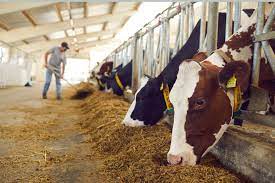
India continues to hold its position as the world’s largest milk producer, accounting for more than one-fourth of global production. According to the Department of Animal Husbandry & Dairying (DAHD), milk production in the country reached 239.3 million metric tonnes in 2023–24, marking a 63.5% growth over the past decade—from 146.3 million tonnes in 2014–15. India’s milk output has been growing at an impressive 5.7% annually, compared to the global average of just 2%.
Per capita availability of milk in India now stands at 471 grams per person per day, far exceeding the global average of 322 grams. This reflects not only the steady rise in production but also the country’s ability to meet its domestic demand effectively.
Milk prices in India are not regulated by the government but are determined by cooperatives and private dairies, based on factors such as production costs, dairy commodity stocks, and market conditions. The Consumer Price Index (CPI) for milk shows only a moderate rise over the years, with inflation standing at 2.74% in July 2025, compared to 8.28% in July 2023. Importantly, DAHD clarified that it has not received any reports suggesting that rising milk prices have affected children’s nutritional access.
To ensure long-term stability and growth in the dairy sector, the Government is implementing several flagship schemes:
- Rashtriya Gokul Mission (RGM): For conservation of indigenous breeds, genetic upgradation, and productivity enhancement of bovines.
- National Programme for Dairy Development (NPDD): Focuses on infrastructure development, milk testing, chilling facilities, upgrading dairy processing units, and improving farmer access to organized markets.
- Supporting Dairy Cooperatives & FPOs (SDCFPO): Provides interest subvention on working capital loans to cooperatives and FPOs during adverse market or natural calamities.
- Animal Husbandry Infrastructure Development Fund (AHIDF): Offers 3% interest subvention to promote investment in livestock product processing and diversification.
- National Livestock Mission (NLM): Encourages entrepreneurship in poultry, sheep, goat, piggery, and fodder, while supporting breed improvement.
- Livestock Health and Disease Control Programme (LHDCP): Strengthens vaccination, veterinary infrastructure, and disease surveillance. A new ‘Pashu Aushadhi’ component ensures availability of affordable generic veterinary medicines through Pradhan Mantri Kisan Samriddhi Kendras (PM-KSKs) and cooperatives.
These interventions are designed to improve bovine productivity, reduce milk production costs, enhance feed and fodder availability, and expand the cooperative dairy network. They also help stabilize milk prices while raising the income of dairy farmers.
With strong policy support, scientific interventions, and cooperative structures, India’s dairy sector is not only meeting the country’s nutritional requirements but also contributing significantly to farmer welfare, rural employment, and food security.


 By
By