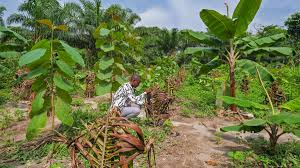
Rapid deforestation in the Congo Basin, one of the world’s most critical tropical forest regions, is raising alarm among climate scientists and agricultural experts. Often described as the “world’s second lung” after the Amazon, the Congo Basin plays a vital role in regulating rainfall patterns across central and western Africa. But accelerating forest loss is now threatening to disrupt these weather systems, potentially affecting cocoa production in countries such as Ivory Coast and Ghana.
These two West African nations account for more than 60 percent of global cocoa supply. Their farms rely heavily on consistent seasonal rainfall to sustain cocoa trees, which are particularly sensitive to moisture stress. Researchers warn that continued deforestation in the Congo Basin could reduce regional rainfall levels, increasing the likelihood of prolonged dry spells. Such changes would put cocoa yields at risk, endangering the livelihoods of millions of smallholder farmers who depend on the crop.
Environmental analysts point to expanding agriculture, illegal logging, and charcoal production as key drivers of forest loss in the Congo Basin. As trees disappear, the region loses its ability to recycle moisture and support cloud formation. This process weakens the natural rainfall corridor that stretches from central Africa toward West Africa’s cocoa belt. Climate models suggest that even modest reductions in forest cover could lead to significant declines in rainfall during peak growing months.
For the global chocolate industry, this emerging threat adds to existing challenges. Cocoa prices have already experienced volatility due to disease outbreaks, aging plantations, and extreme weather patterns in West Africa. If rainfall becomes less reliable, production could fall further, putting upward pressure on prices in international markets. Manufacturers and consumers alike may feel the impact as supply becomes more unpredictable.
Local communities in the Congo Basin are also at risk. Deforestation not only disrupts regional weather patterns but also erodes biodiversity, reduces soil fertility, and increases vulnerability to climate-related disasters. Conservation groups are urging governments and international partners to expand forest protection programs, promote sustainable land-use practices, and strengthen monitoring of logging activities.
Several West African governments have expressed concern about the potential spillover effects on their agricultural sectors. Some are exploring climate adaptation strategies, including drought-resistant cocoa varieties and agroforestry systems that improve soil moisture retention. However, experts emphasize that safeguarding the Congo Basin itself remains essential to long-term climate stability in the region.
As deforestation continues at a worrying pace, the global community faces mounting pressure to act. Protecting the Congo Basin is not only critical for preserving one of the planet’s largest carbon sinks—it is increasingly clear that the future of the world’s cocoa supply may depend on it.


 By
By