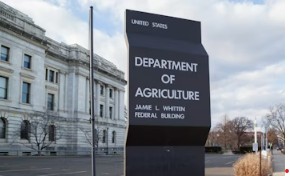
The U.S. Department of Agriculture (USDA) will soon undergo a significant leadership transition as Chief Economist Seth Meyer prepares to step down from his role after nearly four years of service. Meyer, who has guided the department’s economic analysis and market projections since 2021, will leave the federal agency to join a food and agricultural policy institute at the University of Missouri, according to Reuters.
Meyer’s tenure at USDA coincided with a turbulent period for global agriculture. His office was central to producing the World Agricultural Supply and Demand Estimates (WASDE), a market-moving report closely watched by farmers, traders, and policymakers. Throughout his term, Meyer oversaw the government’s response to major disruptions, including pandemic-related supply chain shocks, heightened global food insecurity, and rapidly shifting grain flows triggered by geopolitical conflicts.
His departure comes at a sensitive time, as global crop markets continue to adjust to climate volatility, ongoing conflicts affecting key producing regions, and growing concerns over trade tensions. Analysts note that the USDA’s leadership team will face heightened pressure to deliver accurate and transparent forecasts amid increasingly unpredictable conditions. The chief economist’s role is widely viewed as one of the most influential within the department, guiding agricultural policy decisions, informing federal programs, and shaping the government’s outlook on farm income, commodity prices, and international trade.
Meyer’s move to the University of Missouri represents a return to academia; he previously worked with the same institution before rejoining USDA during the Biden administration. At the university’s agricultural policy institute, he is expected to continue his research and analysis on crop markets, biofuels, and global food systems—areas in which he has long been recognized as an expert.
USDA has not yet announced a successor. Until a new chief economist is appointed, senior staff within the Office of the Chief Economist are expected to manage ongoing reporting responsibilities.
Meyer’s departure underscores the broader challenges facing the agricultural sector as it navigates rapid market shifts, climate uncertainties, and evolving consumer demands. His experience and leadership have been central to federal agricultural analysis during a period of unusual complexity. As he transitions to his new role, attention will turn to how USDA maintains continuity in its economic forecasting—and who will be chosen to guide the department through the next chapter of global agricultural change.


 By
By