

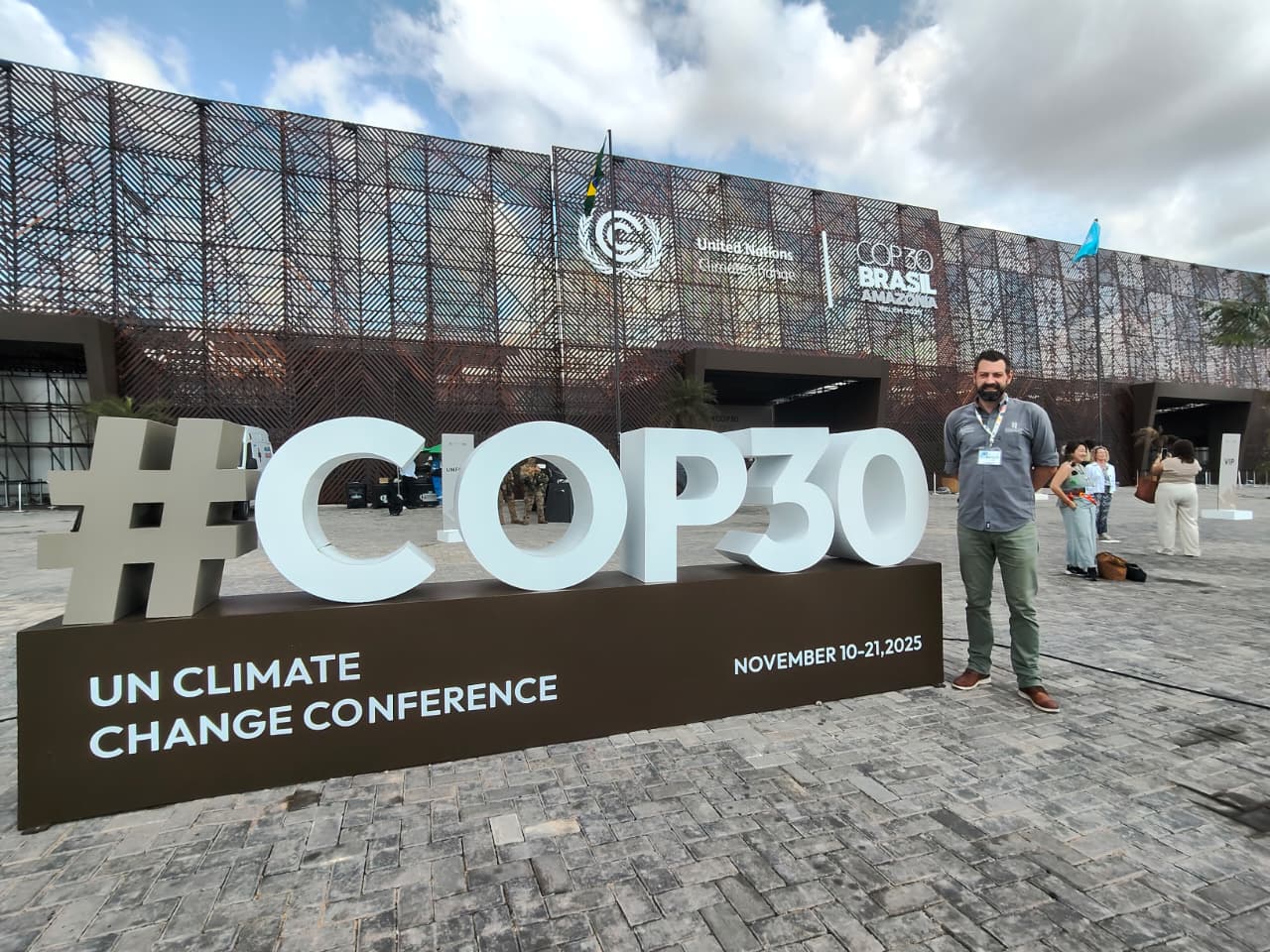
COP30 marked a significant shift in international climate dialogue, placing agriculture, food systems, and the voices of rural and Indigenous communities at the forefront of global negotiations for the first time. Held in the Brazilian Amazon, the conference underscored a clear message: achieving climate resilience is impossible without transforming the systems that produce and sustain the world’s food supply. The Belém Declaration reinforced this perspective, emphasizing the interconnectedness of food security, land stewardship, and climate adaptation, and calling for solutions that align scientific innovation with local knowledge and community priorities.
Throughout the conference, contributions from governments, scientific institutions, and farming communities demonstrated broad agreement that this decade must fully integrate agriculture into climate strategies. Within this evolving landscape, the International Maize and Wheat Improvement Center (CIMMYT) showcased its global work, highlighting innovations developed with international partners to strengthen resilience from the ground up. CIMMYT participated in high-level sessions at the CGIAR–FAO Agriculture and Food Pavilion, sharing insights on climate adaptation, digital advisory tools, soil health, and sustainable nitrogen management. The organization also presented at the Gates Foundation’s Innovation Showcase, demonstrating technologies designed to address rising climate pressures on agrifood systems.
Negotiators advanced several landmark commitments at COP30, including a pledge to triple adaptation finance by 2035, the launch of the Global Implementation Accelerator and the Belém Mission to protect the 1.5°C target, and renewed efforts to strengthen the Global Goal on Adaptation. A key decision affirmed that by 2027, food systems must be formally integrated into all countries’ Nationally Determined Contributions under the Paris Agreement.
CIMMYT highlighted its work with community-led adaptation, showcasing tools such as Agrotutor, collaborative data systems, and agroclimatic analytics that help translate scientific insights into practical decisions for farmers facing increasingly unpredictable weather. The organization also emphasized the critical role of low-emission agricultural pathways, presenting progress in conservation agriculture, regenerative practices, and efficient nitrogen management. Among the innovations featured was CropSustaiN, an initiative using biological nitrification inhibition to reduce nitrogen losses and develop wheat varieties that require fewer inputs.
The conference also reaffirmed the importance of seed and germplasm banks as foundations for climate resilience and biodiversity. CIMMYT’s Germplasm Bank—supporting more than eighty countries—was recognized for its global impact, with nearly 70% of the world’s wheat and over half of global maize production originating from its genetic materials. The organization emphasized the need to combine long-term conservation with seed systems that deliver diversity back to farming communities through participatory breeding and local adaptation.
Meetings with institutions such as IICA, EMBRAPA, the Coalition of Action for Soil Health, and Food Tank reinforced a shared commitment to climate-smart, socially inclusive agrifood transformation. COP30 ultimately confirmed that agriculture is indispensable to climate action, and CIMMYT reiterated its commitment to advancing science that serves farmers, deepening partnerships, and supporting communities as they navigate an increasingly challenging climate future.


 By
By











