

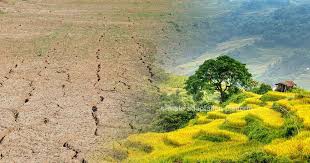
Agricultural research organizations around the world are intensifying efforts to develop climate-resilient crop varieties capable of withstanding drought, extreme heat, emerging diseases, and other environmental stresses. As climate change continues to pose significant challenges to global agriculture, scientists and policymakers increasingly view crop innovation as a critical tool for ensuring long-term food security.
The growing focus on climate-resilient agriculture comes amid rising concerns over the impact of unpredictable weather patterns on food production. Frequent droughts, heatwaves, floods, and pest outbreaks have affected crop yields in many agricultural regions, highlighting the need for crops that can adapt to changing environmental conditions.
Drought-Tolerant Varieties Receive Greater Attention
Water scarcity has become one of the most pressing challenges facing agriculture. In response, researchers are developing drought-tolerant varieties of major crops such as wheat, rice, maize, sorghum, and soybean.
These improved varieties are designed to maintain productivity under limited water availability by using moisture more efficiently and developing stronger root systems. Scientists believe such innovations could help farmers sustain crop yields during prolonged dry periods while reducing pressure on increasingly scarce water resources.
Several countries have already begun introducing drought-resistant crop varieties through national breeding programs and public-private research partnerships.
Heat-Tolerant Crops Become a Priority
Rising temperatures are creating additional risks for agricultural production worldwide. Excessive heat during flowering and grain-filling stages can significantly reduce yields and crop quality.
To address this challenge, plant breeders are working to develop heat-tolerant crop varieties capable of performing under higher temperatures. Research programs are focusing on identifying genetic traits that allow plants to continue growing and producing under heat stress conditions.
Experts believe these advancements will be particularly important in tropical and subtropical regions where climate models predict more frequent and intense heatwaves in the coming decades.
Disease Resistance Strengthens Agricultural Resilience
Changing climatic conditions are also influencing the spread of plant diseases and pests. Warmer temperatures and shifting weather patterns can create favorable environments for pathogens that threaten major food crops.
Agricultural scientists are therefore placing greater emphasis on breeding disease-resistant varieties. New crop lines are being developed to withstand fungal infections, bacterial diseases, viral outbreaks, and pest infestations that can cause substantial economic losses.
Improved disease resistance can help farmers reduce reliance on chemical crop protection products while maintaining stable yields and production efficiency.
Advanced Technologies Speed Up Research
Modern technologies are significantly accelerating crop improvement efforts. Researchers are increasingly using advanced breeding techniques, genomics, artificial intelligence, remote sensing, and data analytics to identify desirable traits and develop improved varieties more quickly.
Gene mapping and molecular breeding tools allow scientists to select plants with specific characteristics, reducing the time required to develop new cultivars. These innovations are helping research institutions respond more effectively to emerging climate challenges.
Public research organizations, universities, and private seed companies are investing heavily in climate-smart crop development programs to meet future agricultural demands.
Supporting Farmers and Food Security
Climate-resilient crops are expected to play a crucial role in helping farmers adapt to environmental uncertainty. By maintaining productivity under challenging conditions, these varieties can support farm incomes, stabilize food supplies, and strengthen rural livelihoods.
Smallholder farmers, who are often most vulnerable to climate shocks, stand to benefit significantly from access to improved seeds and resilient farming technologies.
Governments and international development agencies are increasingly supporting programs that promote the adoption of climate-resilient crop varieties through extension services, seed distribution initiatives, and agricultural research funding.
Long-Term Outlook
As climate risks continue to intensify, experts agree that developing resilient crop varieties will remain a cornerstone of global food security strategies. While no single solution can eliminate the challenges posed by climate change, advances in plant breeding and agricultural science are providing valuable tools to help agriculture adapt.
With continued investment in research, innovation, and farmer access to improved technologies, climate-resilient crops are expected to play an increasingly important role in safeguarding food production and meeting the nutritional needs of a growing global population in the decades ahead.


 By
By











