

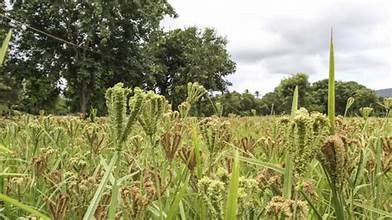
The global demand for millets is witnessing remarkable growth as countries across the world increasingly embrace these ancient grains as a sustainable solution to the growing challenges of climate change, food security, and malnutrition. Once considered traditional crops cultivated mainly in Asia and Africa, millets are now emerging as “future crops” due to their exceptional resilience to harsh climatic conditions, low water requirements, and high nutritional value.
Agricultural scientists, policymakers, food industries, and international development organizations are promoting millets as climate-smart crops capable of supporting sustainable agriculture while ensuring better nutrition for millions of people. With rising temperatures, irregular rainfall, prolonged droughts, and declining groundwater resources affecting conventional cereal production, many countries are encouraging farmers to diversify their cropping systems by adopting millet cultivation.
Experts point out that crops such as pearl millet, sorghum, finger millet, foxtail millet, little millet, kodo millet, barnyard millet, and proso millet require significantly less irrigation compared to rice and wheat. These crops can survive under drought conditions, grow in poor or marginal soils, and perform well even in areas with limited agricultural inputs. Their adaptability makes them highly suitable for regions increasingly vulnerable to climate change.
Several countries across Africa, Asia, and Europe have already initiated climate adaptation programmes that include expanding millet cultivation. Governments are introducing improved seed varieties, promoting sustainable farming practices, and providing extension support to encourage farmers to shift towards climate-resilient crops. Agricultural research institutions are also developing high-yielding and disease-resistant millet varieties capable of delivering better productivity under changing weather conditions.
Nutrition experts emphasize that millets offer substantial health benefits in addition to environmental advantages. Rich in dietary fibre, essential minerals, antioxidants, iron, calcium, magnesium, and protein, millets are increasingly being recognized as “nutri-cereals.” Their naturally gluten-free composition has made them particularly popular among consumers seeking healthier diets and individuals with gluten intolerance or celiac disease.
The global food processing industry is responding rapidly to changing consumer preferences. Leading food companies are introducing a wide range of millet-based products, including breakfast cereals, ready-to-eat snacks, nutrition bars, bakery products, pasta, noodles, biscuits, beverages, and plant-based foods. Restaurants and health-focused food brands are also incorporating millet ingredients into their menus as demand for functional and sustainable foods continues to rise.
Consumer awareness regarding healthy eating has further accelerated millet consumption. Nutritionists recommend replacing refined grains with whole millets to improve digestive health, regulate blood sugar levels, support heart health, and reduce lifestyle-related diseases such as obesity and diabetes. This growing health consciousness is creating new market opportunities for millet producers and food manufacturers worldwide.
Researchers believe that increased investment in millet breeding, mechanized processing, post-harvest technologies, and value addition will significantly improve the profitability of millet cultivation. Enhanced processing infrastructure can help produce high-quality flour, ready-to-cook products, and premium health foods, thereby increasing farmers’ incomes while reducing post-harvest losses.
The expansion of millet value chains is also expected to generate employment opportunities in rural areas through processing, packaging, transportation, branding, and export activities. Smallholder farmers, women-led self-help groups, and agri-startups are increasingly participating in millet-based enterprises, contributing to rural economic development and entrepreneurship.
Global agricultural experts note that promoting millets aligns closely with international efforts to build resilient food systems capable of withstanding climate shocks. As water scarcity becomes more severe and agricultural sustainability gains greater importance, millets offer an environmentally friendly alternative that requires fewer chemical inputs and supports biodiversity conservation.
With governments, research institutions, private companies, and consumers working together, millets are gradually moving from traditional farms to mainstream global markets. Experts believe that sustained policy support, scientific innovation, farmer awareness, and market development will enable these ancient grains to play a transformative role in ensuring food and nutritional security while strengthening climate resilience for future generations.
The growing global recognition of millets signals a major shift in agricultural priorities, positioning these climate-smart nutri-cereals as one of the most promising crops for achieving sustainable development and building resilient food systems in an increasingly uncertain climate.


 By
By











