

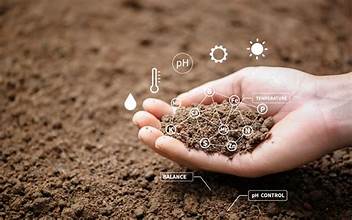
The global movement to restore soil health is gaining significant momentum as countries, agricultural scientists, and international organizations intensify efforts to combat land degradation and declining soil fertility. With growing concerns over climate change, food insecurity, and shrinking arable land, experts are emphasizing that healthy soil is the foundation of sustainable agriculture and long-term food production.
Governments across Africa, Asia, Europe, and the Americas are introducing policies and programmes that encourage farmers to adopt regenerative farming practices, balanced nutrient management, and conservation agriculture. These initiatives aim to improve soil fertility, increase agricultural productivity, and strengthen the resilience of farming systems against climate-related challenges such as droughts, floods, and erratic rainfall.
According to international agricultural experts, nearly one-third of the world’s agricultural soils are moderately to highly degraded due to continuous erosion, excessive use of chemical fertilizers and pesticides, deforestation, overgrazing, monocropping, and unsustainable farming practices. Soil degradation has resulted in declining crop yields, reduced biodiversity, lower water-holding capacity, and increased vulnerability to climate change.
Scientists warn that if current trends continue, millions of hectares of productive farmland could lose their capacity to support profitable agriculture. Declining soil organic matter has become one of the biggest concerns for researchers, as it directly affects nutrient availability, microbial activity, and the overall health of agricultural ecosystems.
To reverse this trend, governments and research institutions are promoting a range of sustainable soil management practices. Farmers are increasingly being encouraged to adopt cover cropping, which protects soil from erosion while improving organic matter and suppressing weeds. Cover crops also enhance soil biodiversity by providing food for beneficial microorganisms and earthworms that improve soil structure.
Another widely recommended practice is crop rotation, where different crops are grown in succession to naturally replenish nutrients, reduce pest and disease pressure, and improve overall soil fertility. Rotating cereals with legumes, for example, helps increase nitrogen availability through biological nitrogen fixation, reducing dependence on synthetic fertilizers.
Experts are also highlighting the benefits of organic amendments, including farmyard manure, compost, vermicompost, crop residues, and green manures. These materials increase soil organic carbon, improve soil texture, enhance microbial activity, and boost water retention capacity. Healthier soils require fewer external inputs while producing more stable crop yields over time.
Conservation tillage and minimum soil disturbance are becoming increasingly popular under conservation agriculture programmes. Reduced tillage protects soil structure, minimizes erosion, conserves moisture, and allows beneficial soil organisms to thrive. Combined with residue retention and diversified cropping systems, conservation agriculture offers a sustainable pathway for restoring degraded farmland.
The use of biofertilizers and microbial inoculants is also expanding globally. These biological products improve nutrient availability, promote root development, and support beneficial microbial populations in the soil. Agricultural researchers believe integrating biofertilizers with balanced nutrient management can significantly improve soil fertility while reducing dependence on chemical fertilizers.
Balanced nutrient management has emerged as another key priority. Soil testing and site-specific nutrient recommendations enable farmers to apply fertilizers according to actual crop requirements rather than following blanket application methods. This not only improves fertilizer-use efficiency but also reduces nutrient losses, environmental pollution, and production costs.
Agricultural economists emphasize that investing in soil health delivers multiple long-term benefits. Healthy soils produce higher and more stable crop yields, reduce irrigation requirements through improved moisture retention, and lower farming costs by enhancing natural nutrient cycling. Improved soil quality also supports greater biodiversity, benefiting pollinators and other beneficial organisms essential for sustainable agriculture.
Scientists further note that healthy soils play a vital role in addressing climate change. Soil acts as one of the world’s largest natural carbon reservoirs, and increasing soil organic carbon through regenerative agriculture helps capture atmospheric carbon dioxide while reducing greenhouse gas emissions. Improved soil structure also enhances resilience against droughts and heavy rainfall by increasing infiltration and reducing runoff.
International organizations are encouraging greater collaboration between governments, research institutions, private companies, and farming communities to accelerate soil restoration efforts. Investments in farmer training, digital soil mapping, precision nutrient management, and sustainable land management technologies are expected to play an increasingly important role in rebuilding soil fertility.
As global food demand continues to rise while climate challenges intensify, experts believe that restoring soil health is no longer optional but essential for ensuring sustainable agricultural growth. By adopting regenerative farming practices and protecting one of agriculture’s most valuable natural resources, countries can strengthen food security, improve farmer livelihoods, enhance environmental sustainability, and build resilient farming systems capable of supporting future generations.


 By
By











