

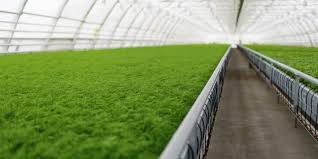
To boost agricultural productivity, climate resilience, and sustainability, the Ministry of Textiles has been promoting the use of technical textiles, including agrotextiles, under the National Technical Textiles Mission (NTTM) launched in 2020.
Under this mission, 14 research and development projects focusing on innovative and sustainable agrotextile applications have been approved. In addition, a Climate-Smart Agrotextiles Demonstration Centre was established in December 2024 in Navsari, Gujarat, at a cost of ₹3.73 crore. Operated by the Synthetic & Art Silk Mills’ Research Association (SASMIRA), the center provides live demonstrations, training, and awareness programs to improve productivity, reduce costs, enhance climate resilience, and promote sustainable agricultural practices. So far, 576 farmers have received training at this center.
The NTTM is a pan-India initiative aimed at advancing technical textiles, with a strategic focus on agrotextiles due to their significant role in improving farm stability and productivity. The mission emphasizes research and innovation, market development, export promotion, and skill enhancement.
Some of the approved agrotextile projects include:
- Development of pesticide-incorporated agro-nets to reduce chemical load on the biosphere (DRDO, Assam)
- Biodegradable electrospun/non-woven composite mulch from natural fiber waste (IIT Delhi)
- Evaluation of natural fiber-based products for high-value horticultural crops in eco-friendly protected structures (IIT Kharagpur)
- Development of smart seed protection bags coated with natural herbal extracts (SITRA, Coimbatore)
- Eco-friendly packaging solutions for agricultural products with UV and microbial protection (Wool Research Association, Mumbai)
- Use of unconventional Himalayan fibers for sustainable agrotextiles (CSK Himachal Pradesh Agricultural University)
- Foam-in-place packaging from agricultural residues (IIT Kanpur)
Other projects focus on natural fiber mulching, crop covers, soil conservation textiles, energy-sensitive agrotextiles for off-season crops, and smart functional textiles for enhanced crop yield.
The Ministry’s initiative aims to create awareness among farmers, reduce input costs, promote sustainable practices, and increase climate resilience, positioning agrotextiles as a critical tool for modern and sustainable agriculture in India.


 By
By











