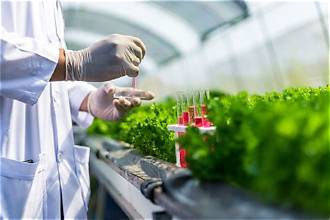
Scientists from the National University of Singapore (NUS) have unveiled a pioneering dissolving microneedle patch that delivers living biofertiliser microbes directly into plant tissues, offering a more efficient and sustainable alternative to conventional soil-based applications. In greenhouse trials, the innovative method accelerated the growth of Choy Sum and Kale, increasing shoot biomass, leaf area, and plant height, all while using over 15% less biofertiliser than standard soil inoculation.
Biofertilisers—beneficial bacteria and fungi that improve nutrient uptake and stress tolerance—traditionally face major limitations when applied to soil. Native microbial competition, soil acidity, and environmental factors can reduce their survival and effectiveness, wasting a significant portion of the applied material. The NUS-developed system bypasses these obstacles by using microneedles that dissolve after inserting into leaves or stems, releasing beneficial microbes directly into plant tissue.
“Inspired by how microbes migrate within the human body, we hypothesised that delivering beneficial microbes straight into plant tissues would allow them to move to the roots and function more effectively, without being hindered by soil conditions,” explained Assistant Professor Andy Tay, who led the research from the Department of Biomedical Engineering at the College of Design and Engineering and NUS iHealthtech.
This targeted delivery approach not only boosts early plant growth but also reduces waste and environmental impact by ensuring more of the applied microbes reach their intended destination. The researchers highlight its strong potential for urban farms, vertical agriculture, and high-value crops, where precise dosing and resource efficiency are critical.
The breakthrough demonstrates how biomedical engineering concepts can transform agriculture, opening the door to more controlled, sustainable, and high-precision crop nutrition technologies.

 By
By