

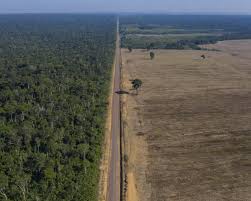
The withdrawal of major grain traders from the Amazon Soy Moratorium has raised renewed concerns over environmental accountability and the future of sustainable soy supply chains. The moratorium, established more than a decade ago, played a critical role in reducing deforestation linked to soy cultivation in the Amazon rainforest, one of the world’s most vital ecosystems.
The Amazon Soy Moratorium was a voluntary agreement between traders, environmental groups, and civil society organizations to prevent the purchase of soy grown on land deforested after a specified cut-off date. Since its implementation, the pact has been widely credited with significantly curbing soy-driven deforestation while allowing Brazil’s soy sector to continue expanding through productivity gains and cultivation on previously cleared land.
However, the recent exit of several large trading companies has cast doubt on the durability of these gains. Environmental advocates warn that weakening industry commitments could open the door to increased land clearing, particularly as global demand for soy continues to rise due to its use in animal feed, biofuels, and food products.
Industry representatives argue that existing national laws and monitoring systems are sufficient to regulate land use and prevent illegal deforestation. They point to Brazil’s forest governance framework and satellite monitoring as tools that can ensure compliance without the need for voluntary agreements. Critics, however, contend that enforcement gaps remain and that voluntary commitments have provided an additional layer of accountability that is now at risk.
The potential environmental consequences extend beyond forest loss. Deforestation in the Amazon is closely linked to biodiversity decline, greenhouse gas emissions, and disruptions to regional rainfall patterns that affect agriculture across South America. Experts caution that increased deforestation could undermine climate goals and threaten the long-term sustainability of agricultural production itself.
The collapse of the moratorium also raises concerns for global buyers and investors increasingly focused on environmental, social, and governance (ESG) standards. Food companies and financial institutions reliant on soy supply chains may face heightened scrutiny from consumers and regulators if deforestation risks increase.
As international attention remains focused on climate action and sustainable land use, the future of soy production in the Amazon is once again under debate. Observers note that maintaining transparency, traceability, and credible safeguards will be essential to balancing agricultural growth with environmental protection in one of the world’s most sensitive regions.


 By
By











