

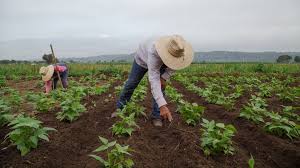
Wikifarmer has launched a new Global Farmer Insights Survey aimed at capturing real-world data directly from farmers across regions and production systems. The worldwide initiative seeks to generate practical, on-the-ground insights into how producers are responding to climate pressures, market volatility, and evolving social and economic challenges, with the goal of informing evidence-based policy and agricultural practice.
The survey is designed to gather first-hand information on a wide range of topics, including climate impacts on crop and livestock production, access to markets and inputs, price fluctuations, technology adoption, and farmer well-being. By collecting standardized data from diverse geographies, Wikifarmer aims to enable large-scale meta-analysis that can reveal trends, risks, and opportunities often missed by conventional top-down assessments.
According to the organizers, one of the key strengths of the initiative is its farmer-centric approach. Rather than relying solely on secondary data or institutional reporting, the survey prioritizes producers’ experiences and decision-making realities. This bottom-up perspective is expected to provide a more nuanced understanding of how global challenges are playing out at the field level and how farmers are adapting in different socio-economic and environmental contexts.
The data generated through the survey will be anonymized and aggregated to protect participants’ privacy while ensuring analytical value. Wikifarmer plans to make insights available to researchers, policymakers, agribusinesses, and development organizations to support better-informed strategies on climate adaptation, market stability, and rural livelihoods.
The initiative also aims to strengthen dialogue between farmers and decision-makers. By translating survey findings into actionable insights, Wikifarmer hopes to bridge gaps between policy design and on-ground realities, helping stakeholders develop solutions that are both scalable and locally relevant.
As agriculture faces mounting pressures from climate change, economic uncertainty, and resource constraints, initiatives such as the Global Farmer Insights Survey reflect a growing recognition of the importance of producer-led data. Wikifarmer’s effort underscores the value of listening directly to farmers to build more resilient, inclusive, and sustainable food systems worldwide.


 By
By











