

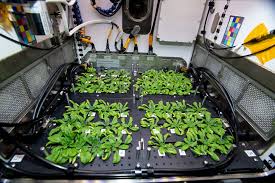
A major space agriculture experiment led by Australian researchers has been launched to the International Space Station (ISS), marking a significant step toward sustainable food production beyond Earth. The project aims to study how crops grow in microgravity conditions, generating insights that could support long-duration space missions while also advancing agricultural innovation on Earth.
The experiment focuses on plant growth dynamics in a microgravity environment, where the absence of normal gravitational forces alters root orientation, nutrient transport, water distribution, and cellular development. By analyzing these physiological responses, scientists hope to better understand how plants adapt to extreme conditions and how to optimize growth systems for controlled environments.
Researchers are particularly interested in how microgravity influences root architecture, gene expression, stress tolerance, and nutrient uptake efficiency. Findings from the ISS study could inform the development of resilient crop varieties capable of thriving in challenging terrestrial environments such as drought-prone or nutrient-deficient soils.
The initiative aligns with global efforts to support sustainable food systems for future space exploration, including missions to the Moon and Mars. As space agencies plan for extended human presence beyond Earth, reliable food production systems are essential to reduce dependency on resupply missions. Controlled-environment agriculture, hydroponics, and closed-loop life support systems are central to this strategy.
Beyond its extraterrestrial applications, the experiment holds strong implications for Earth-based agriculture. Insights into plant stress biology, water-use efficiency, and optimized growth conditions can contribute to precision farming, vertical agriculture, and climate-resilient cropping systems. Technologies developed for space such as compact growth chambers, LED-based lighting systems, and nutrient recycling methods often find practical applications in urban farming and high-tech greenhouse operations.
The Australia–ISS collaboration underscores the growing intersection between space science and agricultural research. By leveraging microgravity as a research platform, scientists are expanding the boundaries of crop science and exploring innovative pathways to secure food production under extreme conditions.
As the experiment begins its mission aboard the ISS, it represents both a scientific milestone and a forward-looking investment in sustainable agriculture on Earth and beyond.


 By
By











