

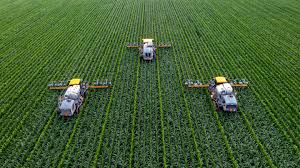
The global precision agriculture industry is experiencing significant expansion as farmers increasingly adopt advanced technologies to improve productivity, reduce costs, and make farming more sustainable. Industry forecasts suggest that the precision agriculture market could reach approximately $23.1 billion by 2030, reflecting growing demand for data-driven farming solutions across the world.
Precision agriculture, often referred to as smart farming, involves the use of digital technologies such as artificial intelligence (AI), sensors, drones, satellite imagery, GPS-guided equipment, and data analytics to optimize agricultural operations. These tools help farmers make informed decisions about irrigation, fertilization, pest management, and crop health monitoring, ultimately improving farm efficiency and profitability.
One of the primary drivers behind the sector’s growth is the increasing need to enhance food production while conserving natural resources. With the global population continuing to rise and agricultural land becoming more limited, farmers are under pressure to produce more food using fewer inputs. Precision agriculture technologies enable producers to apply water, fertilizers, and pesticides more accurately, reducing waste and environmental impact.
Artificial intelligence is playing an increasingly important role in modern farming systems. AI-powered platforms can analyze vast amounts of data collected from fields and provide real-time recommendations to farmers. These systems can detect crop stress, identify disease outbreaks, predict yield performance, and support decision-making throughout the growing season.
Drone technology has also become a key component of precision agriculture. Equipped with advanced cameras and sensors, drones can capture detailed images of fields and provide valuable insights into crop conditions. Farmers can use this information to identify problem areas, monitor plant health, and take corrective actions before issues become widespread.
Similarly, smart sensors installed in fields are helping producers monitor soil moisture, nutrient levels, temperature, and other environmental factors. The data collected by these devices allows farmers to manage resources more efficiently and respond quickly to changing field conditions. Precision irrigation systems, for example, can deliver water only where and when it is needed, helping conserve water while maintaining crop productivity.
The adoption of precision agriculture is accelerating in both developed and emerging agricultural markets. Countries in North America, Europe, Asia-Pacific, and Latin America are investing in digital farming solutions to improve agricultural competitiveness and strengthen food security. Governments, research institutions, and private companies are also supporting innovation through funding programs and technology partnerships.
Agricultural machinery manufacturers are increasingly integrating smart technologies into tractors, harvesters, and planting equipment. GPS-guided systems and automated machinery enable precise field operations, reducing labor requirements and improving operational accuracy.
Despite the positive outlook, some challenges remain. High initial investment costs, limited digital infrastructure in rural areas, and the need for farmer training continue to affect adoption rates in certain regions. However, falling technology costs and increasing awareness of the benefits of smart farming are expected to encourage wider use in the coming years.
Industry experts believe precision agriculture will play a vital role in the future of global food production. As technology continues to evolve, data-driven farming practices are expected to help farmers increase yields, improve resource efficiency, and build more resilient agricultural systems capable of meeting growing global food demand.
With innovation accelerating across the agricultural sector, precision agriculture is rapidly becoming a cornerstone of modern farming and a key contributor to sustainable agricultural development worldwide.


 By
By











