

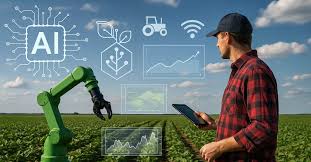
The agricultural sector is entering a new era of technological advancement as researchers and industry experts push for the creation of a comprehensive ecosystem for collecting real-world farm data. The initiative is expected to accelerate the development of next-generation agricultural artificial intelligence (AI) models, autonomous farming technologies, and advanced decision-support systems that could transform food production globally.
Agriculture has increasingly embraced digital technologies over the past decade, but experts believe that the lack of large-scale, high-quality farm data remains a major obstacle to unlocking the full potential of AI-driven farming. Researchers argue that building a coordinated system for gathering, sharing, and analyzing real agricultural data will help create more accurate and reliable technologies tailored to the needs of farmers.
The proposed ecosystem would bring together data from farms, research institutions, agricultural technology companies, machinery manufacturers, and government agencies. Information related to crop growth, soil conditions, weather patterns, irrigation practices, pest outbreaks, machinery performance, and livestock management could be integrated into advanced AI systems capable of generating practical recommendations for farmers.
Supporters of the initiative say that real-world farm data is essential for training AI models that can operate effectively in diverse agricultural environments. Unlike laboratory-based datasets, information collected directly from working farms reflects the complexities and variability of actual farming conditions. This allows AI systems to better understand regional differences and provide more precise recommendations.
One of the most promising applications of the initiative is the advancement of autonomous farming technologies. Agricultural robots equipped with AI can potentially perform a wide range of tasks, including planting, weeding, spraying, harvesting, and crop monitoring. Access to extensive farm datasets would help these machines make more informed decisions and improve their performance under real field conditions.
Researchers believe that autonomous systems could help address growing labor shortages in agriculture while improving efficiency and reducing operational costs. Precision-targeted actions by robots may also reduce the use of fertilizers, pesticides, and water, supporting more sustainable farming practices.
Decision-support systems are another key area expected to benefit from improved data collection. Modern farming increasingly relies on timely and accurate information to guide management decisions. AI-powered platforms can analyze large volumes of data and provide recommendations on planting schedules, irrigation timing, nutrient management, disease control, and harvest planning.
By combining data from multiple sources, future decision-support systems could offer farmers real-time insights and predictive analytics. Such tools may help producers identify potential problems before they occur, reduce risks, and improve overall farm productivity.
The initiative also highlights the importance of collaboration among stakeholders. Experts emphasize that farmers, technology developers, researchers, policymakers, and agricultural organizations must work together to establish common standards for data collection, storage, and sharing. Ensuring data privacy and ownership rights will remain a critical consideration as the ecosystem develops.
Agricultural AI is already making significant contributions to modern farming through technologies such as drone-based crop monitoring, smart sensors, satellite imagery, and predictive analytics. However, researchers believe that access to larger and more diverse datasets will enable the next generation of AI systems to deliver even greater benefits.
As global agriculture faces challenges related to climate change, resource constraints, labor shortages, and rising food demand, advanced AI technologies are increasingly viewed as essential tools for improving efficiency and resilience. The development of a robust farm data ecosystem could play a pivotal role in shaping the future of agriculture by enabling smarter, more automated, and more sustainable farming systems.
With innovation accelerating across the sector, experts see data-driven agriculture as a key pathway toward enhancing food security, boosting farm profitability, and supporting the long-term sustainability of global food production.


 By
By











