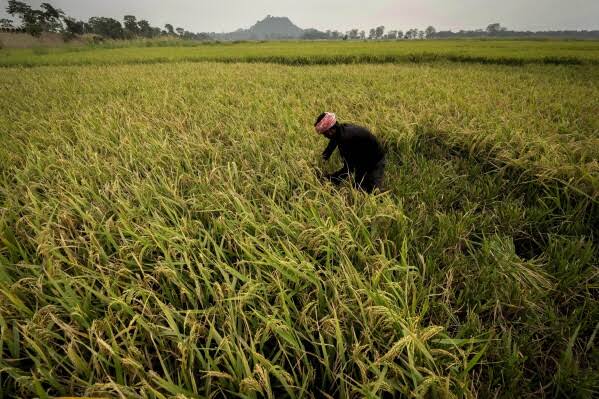
Sitaram Natharam Boran, a farmer from Shyampura (East) village in Palasana block, Sikar district, Rajasthan, is living proof of how sustainable farming can transform lives. Once burdened by low income and rising costs, today he runs a profitable farm that not only supports his family but also inspires other small farmers in the region.
Struggling to Make Ends Meet
Before 2013, Sitaram relied solely on growing wheat and chickpeas on his 2 hectare plot. Despite owning decent land, his dependence on conventional farming methods brought only modest yields. From 2.5 acres, he harvested just 20 quintals of produce, earning about ₹32,000 far too little to meet his family’s basic needs. Rising input costs and stagnant productivity left him disheartened and searching for solutions.
A Turning Point with Natural Farming
In 2012, Sitaram attended a training program on natural farming in Khatushyam, where he learned from Padma Shri awardee Subhash Palekar, a strong advocate of Zero Budget Natural Farming (ZBNF). Inspired by the idea of reducing input costs while boosting soil health and yields, he decided to put these techniques into practice.
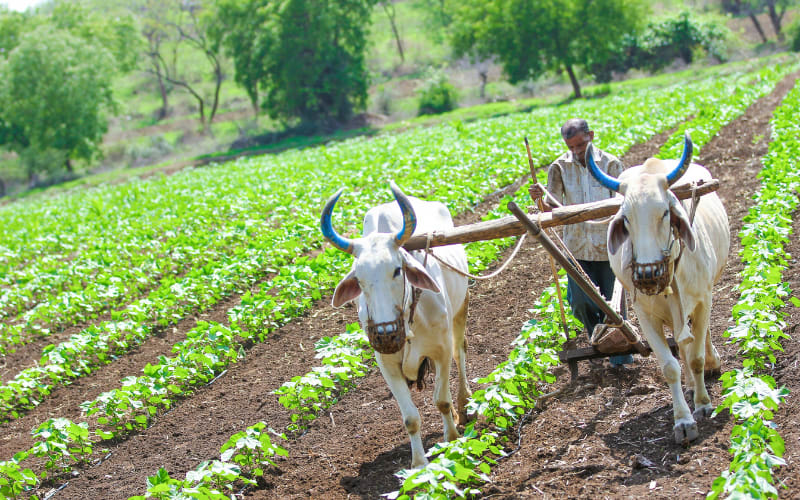
He started by experimenting on a small plot, cultivating vegetables like bitter gourd and bottle gourd using the mandap system. The results were promising better market demand and decent earnings encouraged him to expand further.
From Conventional Crops to Indigenous Varieties
Building on this success, Sitaram switched to growing native wheat varieties like Bansi. Although the yield was slightly lower at 15 quintals from 2.5 acres, the reduced cultivation costs made the switch worthwhile.
To improve water use, he received support under the Pradhan Mantri Krishi Sinchai Yojana (PMKSY) in 2023–24, which enabled him to install drip irrigation for his vegetables and peanuts. In 2024–25, he added a macro-sprinkler system on 1 hectare with additional subsidy support.
By attending training programs, he learned to prepare natural inputs, manage pests with traditional organic mixes, and preserve soil and seed health all of which strengthened his commitment to sustainable agriculture.
Diversifying for Stability
Sitaram gradually adopted a multi crop system to make his farm more resilient. During the kharif season, he grows groundnut, sweet potato, chili, brinjal, cluster beans, millet, and green fodder. In rabi, he cultivates wheat, chickpeas, fenugreek, and peas. Summer crops include watermelon and muskmelon.
This crop diversity not only reduces his dependence on local markets but also meets his family’s food and fodder needs year-round.
Sharing Knowledge, Building Community
Today, Sitaram has conserved over 25 indigenous seed varieties and regularly hosts community meetings on his farm to teach fellow farmers about the benefits of natural farming. His practices include using Jeevamrit (to enrich soil microbes), Beejamrit (for seed treatment), Dashparni ark, Agniastra, and Brahmastra (as botanical pesticides), along with old buttermilk as an eco-friendly pest repellent.
His shift to natural farming has not only secured his income but also contributed to healthier soil and a cleaner environment. His low cost, self-reliant model now serves as an inspiration for other small and marginal farmers looking to break free from the cycle of debt and dependency.


 By