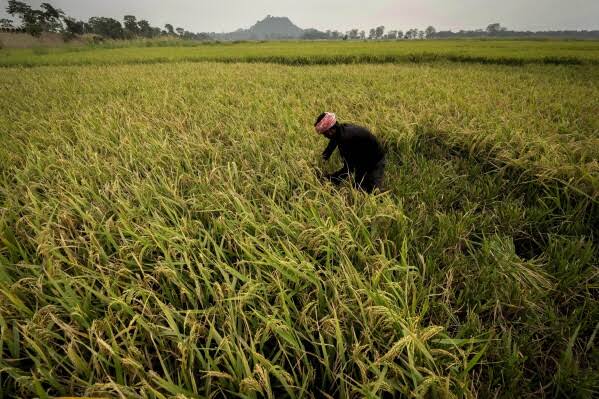
Farmers in Sangrur, Punjab, are grappling with severe groundwater contamination that has rendered their fertile land nearly barren. The source of this toxic water is believed to be a dye manufacturing factory that operated in the region years ago but has long since shut down. Although no trace of the factory remains above ground today, its legacy lives on underground in the form of hazardous chemicals that have seeped into the soil and groundwater.
In Bhawanigarh block’s Aalo Arakh village, farmers are alarmed as their fields continue to yield reddish, chemical laden water from tube wells. Kulwinder Singh, a retired army man and local farmer, shared that for years, the water pumped from his fields has carried a reddish hue, indicating high chemical content. This issue affects not just his farm but many others in the village, turning it into a serious environmental and public health crisis.
Polluted Water Reaches Underground Aquifers
According to Singh, the contamination stems from a now defunct dye factory located about 500 meters from his fields. Over the years, this factory discharged chemical waste that leached into the ground, poisoning the local water table. The impact has been devastating Singh claims two of his brothers died due to diseases linked to this polluted water, and he himself battles health issues believed to be caused by the contamination.
Entire Village in Distress
This is not an isolated problem. Multiple families in the village have suffered the consequences of using this water for drinking and irrigation. Although the National Green Tribunal (NGT) previously collected water samples and the Punjab Pollution Control Board has periodically tested the water, residents say that no concrete solution has been offered so far. Warning notices have even been posted on tube wells, clearly stating that the water is unsafe for consumption.
Soil Quality Deteriorating
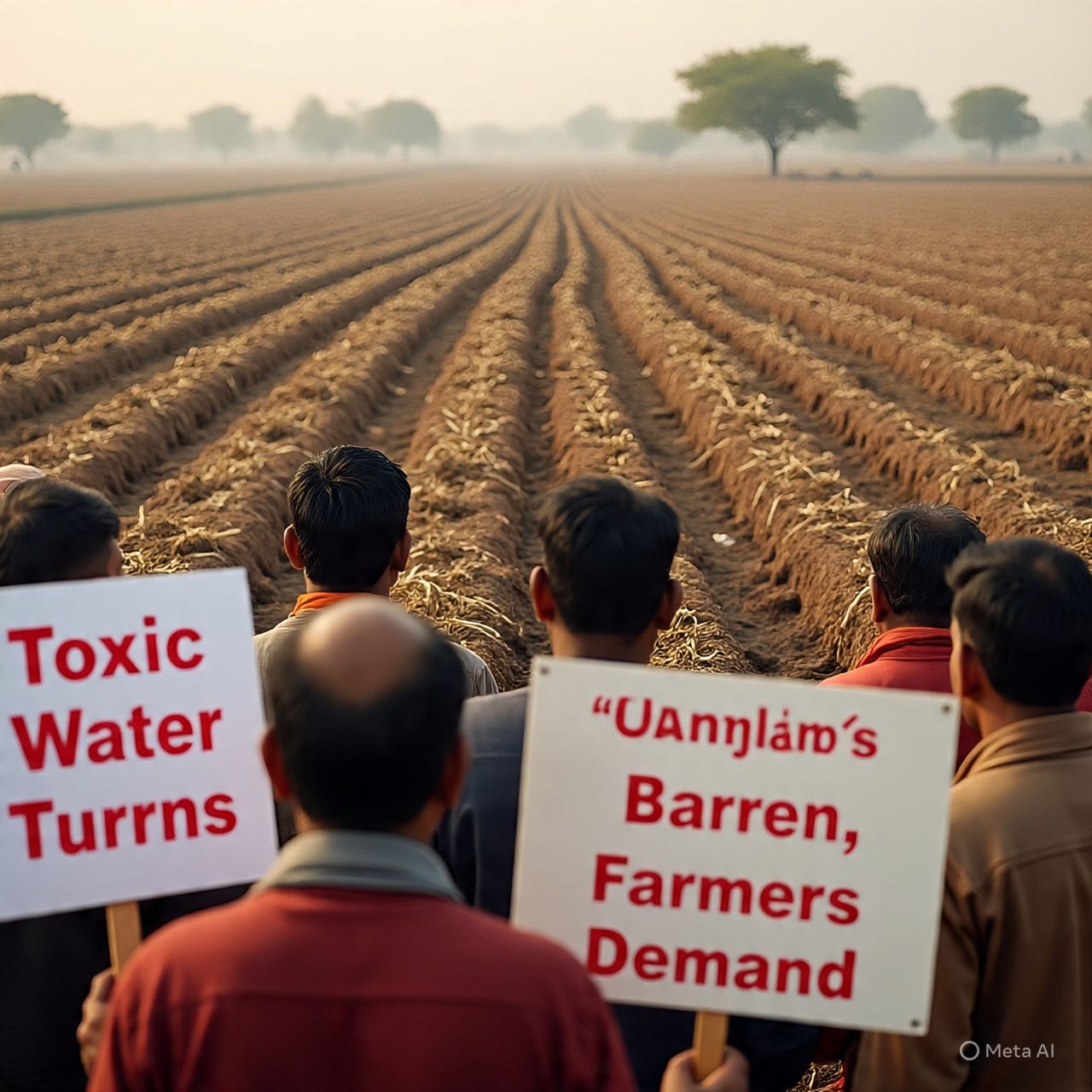
Farmers now carry drinking water from their homes when working in the fields because they can no longer trust the water available on their land. Forced to irrigate with the contaminated water, they have seen soil quality decline and crop yields fall. Singh and other affected farmers are urging the government to take this crisis seriously and implement permanent solutions. They have demanded that the Pollution Control Board move beyond sampling and reports to take strict action against those responsible. They also want compensation and medical support for families suffering due to the pollution.
A Call for Relief
This issue is a stark reminder of how negligence by a single factory has left entire communities to bear the burden long after its closure. The farmers hope for urgent government intervention to ensure access to safe water and to protect their livelihoods. Singh has specifically requested canal water so he can mix it with tube well water for irrigation, which could help reduce damage to his crops.
What Authorities Say
Sangrur’s Deputy Commissioner, Sandeep Rishi, confirmed that a dye-manufacturing unit named Mathadu Chemical once operated near the village and contaminated the local groundwater. The matter reached the National Green Tribunal, which ordered the area’s soil and water to be cleaned up. However, the state government has appealed these orders in the Supreme Court, and the case remains under litigation. Investigations are also underway to identify the officials responsible at the time.
The Deputy Commissioner added that if Singh and other farmers apply for canal water, arrangements will be made on priority to provide clean irrigation water according to regulations. The Mathadu Chemical business, which operated in Ludhiana, Noida, and other places, faces legal proceedings and penalties, and action will be taken soon.


 By