

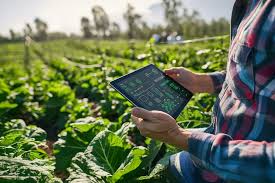
Investment in agricultural technology is continuing to grow across the globe as farmers, agribusinesses, and governments increasingly embrace digital solutions to improve productivity, efficiency, and sustainability. From precision agriculture and farm automation to artificial intelligence and data-driven decision-making, technology is rapidly transforming the way food is produced and managed.
The surge in investment reflects the growing pressure on the agricultural sector to feed a rising global population while dealing with challenges such as climate change, labor shortages, water scarcity, and limited arable land. Industry experts believe that technology-driven innovation will play a crucial role in ensuring future food security and improving the resilience of farming systems.
One of the fastest-growing areas of investment is precision agriculture, which uses technologies such as GPS, sensors, drones, satellite imagery, and data analytics to optimize farm operations. These tools enable farmers to monitor crop health, soil conditions, moisture levels, and nutrient requirements with greater accuracy. By applying inputs such as fertilizers, pesticides, and water only where needed, producers can reduce costs while increasing yields.
Digital farming platforms are also attracting significant attention from investors. These systems collect and analyze large amounts of agricultural data, helping farmers make informed decisions regarding planting schedules, irrigation management, pest control, and harvesting operations. Real-time insights allow producers to respond more effectively to changing field conditions and weather patterns.
Automation is becoming another major focus of agricultural investment. Advanced machinery, robotic systems, and autonomous equipment are increasingly being deployed to perform tasks such as planting, spraying, weeding, and harvesting. These technologies help address labor shortages while improving operational efficiency and reducing production costs.
Artificial intelligence is playing an increasingly important role in modern agriculture. AI-powered applications can analyze weather forecasts, identify crop diseases, predict pest outbreaks, and recommend management practices tailored to specific field conditions. Experts believe that AI has the potential to significantly improve farm productivity while reducing environmental impacts.
Sustainability remains a key driver behind rising technology investments. Governments and agricultural organizations are encouraging the adoption of climate-smart farming practices that reduce greenhouse gas emissions, improve resource efficiency, and strengthen resilience to extreme weather events. Many digital agriculture tools support these objectives by enabling more precise use of natural resources and reducing waste.
Investment activity is being observed across both developed and developing economies. In North America and Europe, large-scale farms are increasingly adopting advanced automation and analytics systems. Meanwhile, countries in Asia, Africa, and Latin America are investing in digital advisory platforms, mobile applications, and affordable precision farming technologies designed for smallholder farmers.
Financial institutions and venture capital firms are also showing growing interest in agricultural technology startups. Companies developing solutions in areas such as remote sensing, farm management software, biotechnology, robotics, and agricultural data analytics are attracting substantial funding as investors recognize the sector’s long-term growth potential.
Despite the positive momentum, challenges remain. High technology costs, limited rural connectivity, inadequate digital infrastructure, and lack of technical training can slow adoption, particularly among small-scale farmers. Experts emphasize the need for supportive policies, affordable financing, and capacity-building programs to ensure that the benefits of agricultural innovation are widely shared.
As global agriculture enters a new era of technological transformation, investment in digital farming and precision agriculture is expected to continue expanding. Industry leaders believe that integrating advanced technologies into farming systems will be essential for increasing productivity, improving sustainability, and ensuring a secure food supply for future generations.


 By
By











