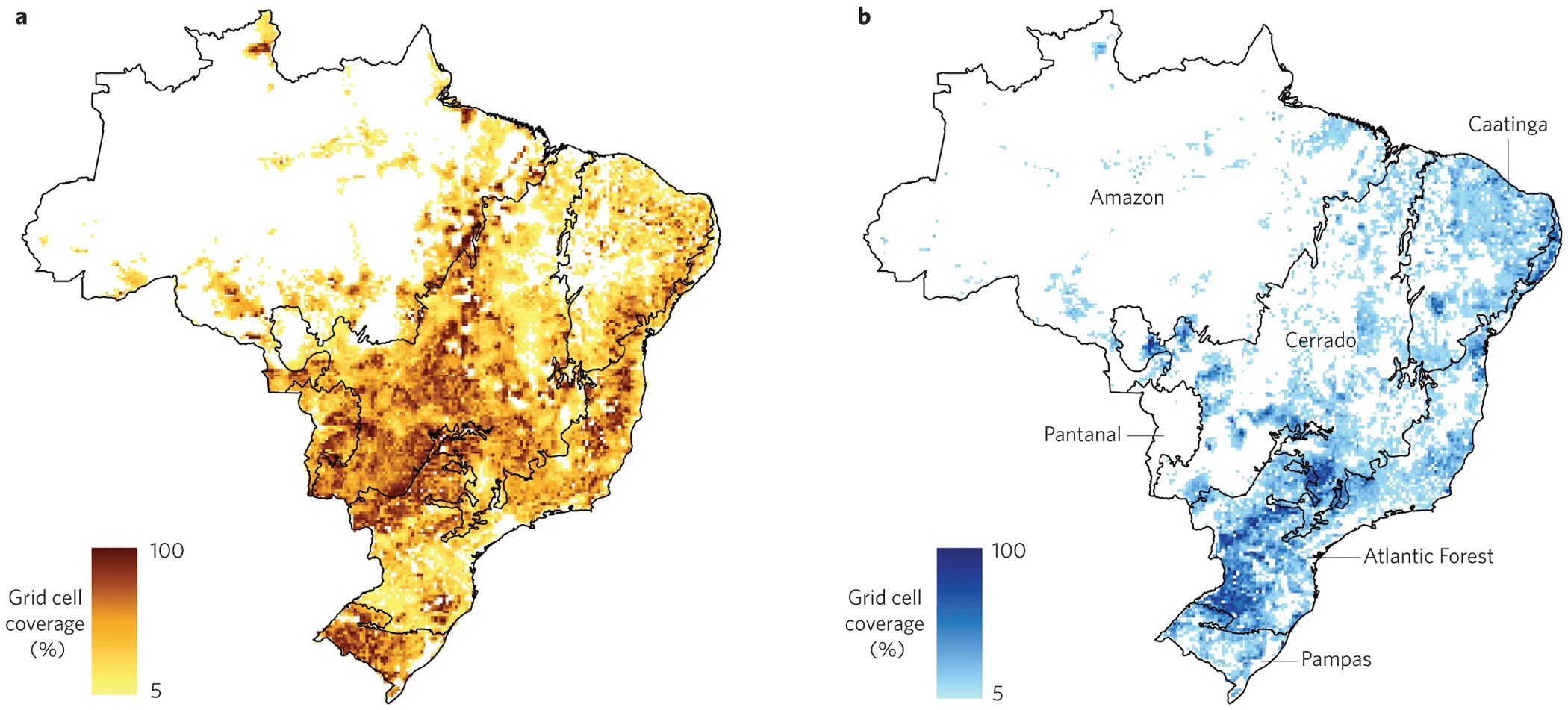
Brazil, one of the world’s leading agricultural powerhouses, is facing growing challenges in balancing its expanding farm economy with the urgent need to preserve biodiversity and mitigate climate change. A recent report highlights how land-use choices in Brazil — particularly in soybean cultivation and cattle ranching — are shaping not only the country’s environmental future but also influencing the global climate system.
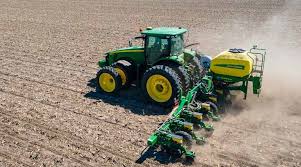
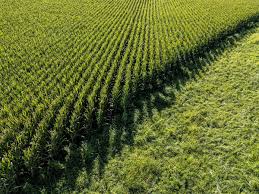
As global demand for agricultural commodities continues to rise, Brazil has become a dominant exporter of soybeans, beef, sugar, and corn, playing a crucial role in feeding the world. However, this success has come with a significant environmental cost. Large-scale agricultural expansion, especially in regions such as the Amazon rainforest and the Cerrado savanna, has led to extensive deforestation, habitat loss, and rising greenhouse gas emissions.
Experts warn that unchecked land conversion for agricultural production risks undermining Brazil’s rich biodiversity — home to roughly 10% of all known species on Earth — while accelerating global warming through carbon release from cleared forests. The article stresses that every hectare of forest cleared for farmland weakens natural carbon sinks, reduces rainfall stability, and threatens both local ecosystems and global weather patterns.
At the same time, Brazil faces a critical opportunity to adopt sustainable land management practices that can balance agricultural productivity with environmental protection. Approaches such as integrated crop-livestock systems, agroforestry, and regenerative farming are being increasingly recognized as viable solutions that maintain soil health, sequester carbon, and reduce deforestation pressure.
Policymakers and researchers argue that achieving this balance requires stronger enforcement of land-use regulations, combined with incentives for farmers to adopt sustainable practices. International markets also play a vital role: global buyers and investors are now demanding more transparency in agricultural supply chains, pushing for products that are deforestation-free and climate-resilient.
The report concludes that Brazil’s land-use decisions will have far-reaching consequences for the planet’s environmental health. If managed responsibly, the country could emerge as a global model for sustainable agriculture, demonstrating that food security and forest conservation can go hand in hand. However, if deforestation and land degradation persist, the environmental and climatic costs could outweigh economic gains affecting ecosystems and communities well beyond Brazil’s borders.
In this critical moment, Brazil’s choices represent not just a national challenge, but a defining test for global climate stability and biodiversity preservation.

 By
By