

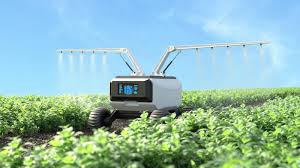
Efforts to bring artificial intelligence to smallholder agriculture are gaining momentum as ag-tech firms, research institutions, and digital innovation centers increasingly deploy compact AI language models tailored to real-world farming challenges. The shift marks a significant evolution in agricultural digitization, aiming to make machine intelligence more accessible, affordable, and impactful for millions of farmers in India and across developing regions.
Unlike large, resource-intensive AI systems, smaller language models are designed to run efficiently on low-bandwidth networks and basic mobile devices—common across rural agricultural communities. Researchers note that these models can deliver targeted advice on crop diseases, weather risks, nutrient management, and pest identification without requiring complex hardware or high computing power.
In India, several ag-tech startups are integrating lightweight AI tools into farmer advisory platforms, enabling voice-based queries in local languages and generating instant, context-specific recommendations. Pilot projects supported by government institutions and international development partners are demonstrating measurable improvements in crop decision-making, particularly in regions where access to agronomists is limited.
Experts say that small AI models are especially valuable for diagnostics, offering on-field support through image recognition and symptom-based assessments. They are also being trained on region-specific datasets to enhance accuracy in diverse cropping systems.
Beyond India, the trend is expanding across Africa, Southeast Asia, and Latin America, where smallholder farms dominate food production. Global research collaborations are focusing on improving model interpretability, reducing bias, and strengthening reliability in low-resource settings.
Industry analysts view this shift as a critical step toward democratizing agricultural AI. By lowering technical and economic barriers, compact AI tools could accelerate digital inclusion, support climate-resilient farming, and strengthen global food security.


 By
By











