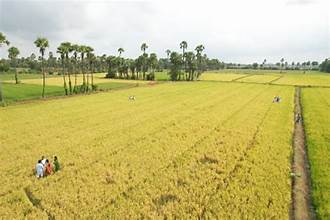
In a proactive step to safeguard farm productivity amid concerns of a weak monsoon, Andhra Pradesh has rolled out a Pre-Monsoon Dry Sowing (PMDS) strategy across several rainfed districts. The initiative is aimed at helping farmers utilize early soil moisture and pre-monsoon showers to begin sowing operations ahead of the main monsoon, thereby improving crop establishment and boosting incomes.
Dry sowing refers to planting seeds in dry or slightly moist soil before the onset of regular rains. Once the monsoon arrives, the seeds germinate quickly, giving crops a crucial head start compared to conventional sowing methods. Agricultural officials believe this early advantage can significantly enhance yield potential, particularly in drought-prone and rain-dependent areas.
According to state agriculture authorities, the PMDS strategy could increase farmer income by ₹5,000 to ₹7,000 per acre, depending on crop type and rainfall distribution. Crops such as groundnut, red gram (pigeon pea), millets, and pulses are being promoted under this approach, as they are well-suited to dry sowing conditions and require relatively less water during initial growth stages.
The state government has mobilized its extension machinery to ensure the success of the program. Farmers are being provided with timely advisories on land preparation, seed treatment, and optimal sowing windows. In addition, quality seeds and inputs are being distributed in advance to avoid delays once favorable conditions arise.
Experts highlight that PMDS is not just a short-term response to monsoon uncertainty but also a climate-resilient farming practice. With increasing variability in rainfall patterns due to climate change, traditional sowing calendars are becoming less reliable. Techniques like dry sowing allow farmers to adapt to these uncertainties and make better use of available resources.
Another advantage of this strategy is improved water-use efficiency. By sowing early, crops can utilize initial rainfall more effectively, reducing dependence on subsequent heavy showers. This is particularly beneficial in regions where rainfall is erratic or unevenly distributed throughout the season.
However, agricultural scientists caution that the success of dry sowing depends heavily on proper execution. Timely rainfall after sowing is critical for germination, and any prolonged dry spell could affect crop establishment. Therefore, farmers are being advised to follow recommended practices carefully and stay updated with weather forecasts.
The initiative has already generated positive responses from farmers in several districts, where early sowing activities have begun. If the monsoon behaves as expected, the state could witness improved crop performance and higher farm incomes despite initial concerns of rainfall deficit.
Overall, Andhra Pradesh’s adoption of the PMDS strategy reflects a forward-looking approach to agriculture, combining traditional knowledge with modern advisory systems. By encouraging climate-smart practices, the state is taking a crucial step toward building resilience in its farming sector while ensuring economic stability for its farmers.


 By
By