

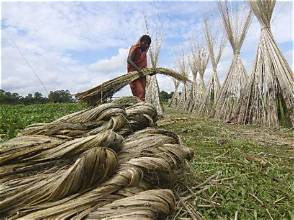
Jute farmers in Bangladesh’s Rajshahi region are witnessing a welcome turnaround this season as a bumper harvest, coupled with significantly higher market prices, has brought renewed optimism to one of the country’s most important agricultural sectors. After enduring several years of low prices, rising production costs, and uncertain demand, growers are finally receiving better returns for their produce, strengthening farm incomes and reviving confidence in the nation’s iconic “golden fibre.”
Rajshahi, one of Bangladesh’s major jute-producing regions, has reported excellent crop yields this year thanks to favorable weather conditions, timely rainfall, and improved cultivation practices. Farmers say the healthy crop has not only increased production but also improved fibre quality, attracting strong demand from traders and processing industries.
The rise in jute prices has been the biggest relief for cultivators. In previous seasons, many farmers struggled to recover their production costs due to weak market prices and declining profitability. This year, however, stronger demand from domestic mills and international buyers has pushed prices upward, enabling growers to earn substantially higher profits from their harvest.
The improved market conditions have encouraged many farmers to continue investing in jute cultivation despite challenges such as increasing labour costs and input expenses. Many growers believe the current price recovery reflects the growing recognition of jute as a sustainable and environmentally friendly natural fibre, especially at a time when governments and industries around the world are seeking alternatives to plastic products.
Bangladesh remains the world’s leading producer and exporter of high-quality raw jute and jute products. The crop plays a vital role in the country’s rural economy, providing employment and income to millions of farming families, traders, transport workers, and employees in the jute processing industry. A successful harvest and favorable prices therefore have far-reaching economic benefits beyond the farming community.
Industry experts note that rising global demand for biodegradable packaging materials and eco-friendly textiles has contributed to stronger interest in jute products. As environmental concerns continue to reshape consumer preferences and government policies, natural fibres such as jute are gaining renewed importance in international markets.
Local agricultural officials have welcomed the positive trend, stating that better farmer incomes will encourage investment in improved seed varieties, modern cultivation techniques, and sustainable farming practices. Increased profitability is also expected to motivate farmers to maintain or expand the area under jute cultivation in the coming seasons.
Farmers in Rajshahi have expressed optimism that stable prices will continue throughout the marketing season. Many hope that consistent government support, efficient marketing systems, and improved access to export markets will help sustain the industry’s recovery and protect growers from the price volatility experienced in previous years.
The revival of Bangladesh’s jute sector comes at an important time for the country’s agricultural economy. Strong production and improved returns are expected to support rural livelihoods, enhance export earnings, and reinforce Bangladesh’s position as a global leader in the production of premium-quality jute.
With abundant harvests, stronger market demand, and better prices, Bangladesh’s “golden fibre” is once again proving its value, bringing renewed hope to thousands of farming families and strengthening the future of one of the country’s most traditional and environmentally sustainable agricultural industries.


 By
By











