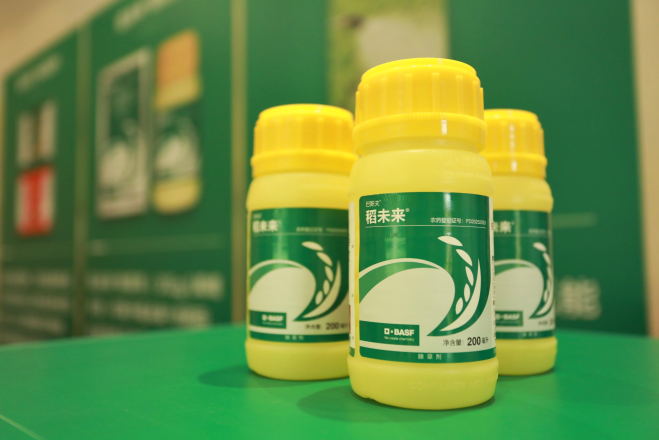
advancement for the country’s direct-seeded rice production. The system integrates BASF’s Provisia® herbicide (300 g/L quizalofop-p-ethyl) with two herbicide-tolerant hybrid rice varieties—Quanyou 822 and Huiliangyou 898—developed jointly by Winall and BASF’s breeding collaborators. Provisia® is also the first quizalofop-p-ethyl-based product approved for use on herbicide-tolerant rice in China.
Direct-seeded rice cultivation has gained strong momentum across China due to its labor-saving and time-efficient advantages. However, weedy rice remains a persistent and costly challenge, as it grows simultaneously with cultivated rice and competes vigorously for sunlight, nutrients, and field space. Traditional herbicides are unable to selectively eliminate weedy rice without damaging the crop itself, leaving farmers with limited options beyond manual removal.
The Provisia® Rice System directly addresses this long-standing issue. The two hybrid rice varieties, Quanyou 822 and Huiliangyou 898, have been widely grown across China for more than a decade and are known for high yield potential, strong disease resistance, lodging resistance, and high grain quality. Their improved versions retain all original agronomic strengths but now carry tolerance to quizalofop-p-ethyl, enabling farmers to apply Provisia® herbicide safely to eliminate target grassy weeds—including weedy rice—without harming the crop.
In addition to weed-selectivity benefits, Provisia® herbicide features a short residual period, making it suitable for crop rotation and safeguarding broadleaf crops grown nearby. When combined with direct-seeding practices, the system reduces water use and contributes to lower carbon emissions compared with traditional flooded paddy cultivation.
Jackson Wang, Vice President of BASF Agricultural Solutions Greater China, emphasized that China plays a central role in global rice production, and the introduction of the Provisia® Rice System aligns with the company’s mission to support farmers with innovative solutions that enhance productivity and sustainability. Winall’s Vice Chairman and General Manager, Qin Zhang, highlighted that the system not only solves a major weed-management challenge but also promotes green agricultural development through water-saving and emission-reducing practices.
Following this launch, BASF plans to expand cooperation with additional partners to further promote herbicide-tolerant rice technologies across China, contributing to the country’s goals for sustainable, high-efficiency agriculture.


 By
By