

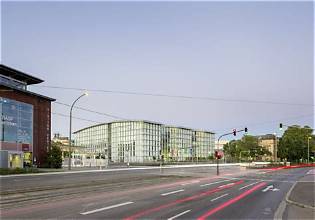
BASF Agricultural Solutions is investing a low double-digit million-euro amount in a new Climate Center at its headquarters in Limburgerhof, Germany, in a move aimed at strengthening agricultural research and regulatory capabilities. Construction of the purpose-built facility has already begun and is scheduled for completion in the first half of 2027.
The new center will be equipped with advanced climate chambers capable of creating precisely controlled environmental conditions for scientific studies. Researchers will be able to regulate factors such as temperature, humidity and light, allowing them to conduct controlled and reproducible experiments.
Focus on Crop Protection Research
According to BASF, the Climate Center will primarily support research required for the registration of crop protection products in markets around the world. The facility is being developed in response to increasing regulatory requirements and growing demand for high-quality studies conducted under Good Laboratory Practice (GLP) standards.
The controlled environment provided by the center will allow scientists to examine how agricultural products and active ingredients behave under different environmental conditions. This can generate scientific data needed to evaluate product performance and environmental safety.
Such research is becoming increasingly important as agricultural production faces changing climatic conditions and more complex regulatory expectations. Farmers are also seeking crop protection solutions that can remain effective while meeting environmental and sustainability requirements.
Strengthening Innovation for Farmers
BASF said the investment forms part of its broader innovation strategy. The company expects the new research infrastructure to strengthen the connection between scientific research and regulatory development, potentially helping innovative agricultural solutions move more efficiently through the development and registration process.
Melanie Bausen-Wiens, a member of the BASF Agricultural Solutions Management Board responsible for Technology, described the facility as a strategic investment combining research and regulatory capabilities.
The center is expected to provide researchers with greater flexibility to reproduce different environmental scenarios in laboratory conditions. This could be particularly valuable for studying the performance and environmental behaviour of crop protection products under a wide range of conditions.
Climate Change Increases Research Needs
Agriculture is increasingly being affected by heatwaves, drought, irregular rainfall and other climate-related stresses. These changes are creating new challenges for farmers and increasing the need for technologies that can support crop productivity while reducing environmental risks.
Climate-controlled research facilities can help scientists better understand how products interact with plants, pests and environmental conditions. Controlled experiments can also complement field trials by allowing researchers to isolate individual factors and study them systematically.
For agricultural companies, this type of infrastructure is becoming an important part of long-term research and innovation strategies.
Completion Planned for 2027
Construction of BASF’s new Climate Center is already underway at the company’s Limburgerhof site. The facility is expected to become operational in the first half of 2027.
The investment represents another major step in BASF Agricultural Solutions’ efforts to expand its research capabilities. The company says the new center will support the generation of reliable scientific data while helping address evolving regulatory requirements for crop protection products.
As climate change continues to reshape agricultural production, investments in controlled research environments could play an increasingly important role in developing safer, more effective and climate-ready agricultural solutions for farmers worldwide.


 By
By











