

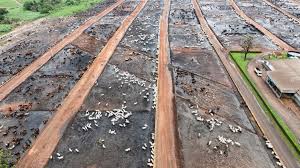
A major new international analysis has found that beef production remains the single largest driver of agriculture-related deforestation worldwide, accounting for roughly 40% of all forest loss linked to farming activities between 2001 and 2022. The study, conducted by a consortium of global land-use researchers, highlights the urgent need for stronger sustainability measures as expanding pastureland continues to reshape ecosystems and carbon balances across tropical regions.
According to the findings, Brazil stands out as the epicenter of this trend. The country alone accounted for nearly one-third of all global deforestation attributed to agriculture over the 21-year period. Much of this loss occurred in the Amazon and Cerrado biomes, where forest cover has been increasingly converted into grazing land for cattle. The report notes that despite several policy initiatives aimed at curbing illegal land clearing, demand for beef exports and domestic consumption continues to place heavy pressure on forest frontiers.
Researchers emphasized that the scale of land transformation linked to beef far exceeds other commodities. Soy, palm oil, cocoa, and coffee all contribute to deforestation, but collectively represent a significantly smaller share than cattle pasture expansion. In many regions, cattle ranching requires extensive land per unit of production, making it inherently more land-intensive than crop cultivation. This structural characteristic, the analysis warns, makes it challenging to reduce forest loss without systemic shifts in land-use planning and supply chain governance.
The study also underscores the climate implications of beef-driven deforestation. Forest loss not only releases large quantities of stored carbon but also eliminates natural carbon sinks critical for moderating global temperature rise. As deforestation continues, researchers caution that global emissions targets could become increasingly difficult to meet, especially if forest conversion accelerates alongside rising demand for animal protein.
Policymakers and environmental groups are urging stronger enforcement of land-clearing regulations, improved transparency in cattle supply chains, and greater support for sustainable ranching practices. Some countries and corporations are also exploring deforestation-free sourcing commitments, although the report notes that implementation remains uneven.
With global food demand projected to rise sharply in the coming decades, the authors warn that limiting forest loss will require coordinated action across governments, the livestock industry, and international markets. Without decisive steps, beef production will remain a dominant force driving deforestation and biodiversity decline worldwide.Vietnam Launches Training Initiative to Advance Low-Emission


 By
By











