

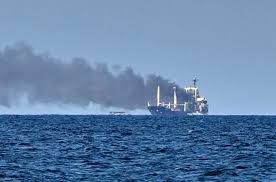
Renewed tensions and increased attacks around the Black Sea shipping routes are once again disrupting global agricultural trade, threatening the movement of key food commodities such as wheat, corn, and vegetable oils. The latest escalation has created fresh uncertainty in international grain markets, driven up freight costs, and intensified concerns about global food security, particularly for countries heavily dependent on imported agricultural products.
The Black Sea region remains one of the world’s most important agricultural export corridors, supplying a significant share of global wheat, maize (corn), sunflower oil, and barley. Any disruption to maritime transport in this strategically vital region has immediate repercussions for food-importing nations across the Middle East, Africa, Asia, and parts of Europe.
Industry analysts report that increasing security risks around commercial shipping lanes have forced some shipping companies to reroute vessels, reduce operations, or demand substantially higher insurance premiums. These developments have significantly increased transportation costs, making agricultural exports more expensive and slowing the delivery of essential food commodities to international markets.
The uncertainty surrounding Black Sea trade has also contributed to heightened volatility in global commodity exchanges. Prices of wheat, corn, and vegetable oils have experienced renewed fluctuations as traders respond to concerns over potential supply shortages and logistical disruptions. Market participants fear that prolonged instability could tighten global grain supplies, especially if export volumes from the region decline further.
Countries that rely heavily on imported cereals are particularly vulnerable to these disruptions. Many developing economies depend on affordable wheat and corn imports to meet domestic food demand. Higher import costs could place additional pressure on government budgets, increase food inflation, and reduce access to staple foods for millions of low-income households.
Agricultural economists warn that freight costs have become a major component of food prices. Rising shipping expenses, combined with higher marine insurance charges and longer delivery routes, are increasing the overall cost of moving agricultural commodities across international markets. Importers are ultimately passing many of these additional costs on to consumers, contributing to broader inflationary pressures.
Vegetable oil markets are also feeling the impact. The Black Sea region is a leading exporter of sunflower oil, an essential cooking oil consumed worldwide. Disruptions to sunflower oil exports may encourage buyers to shift demand toward alternative edible oils such as soybean, palm, and canola oil, placing additional pressure on global vegetable oil supplies and prices.
Food manufacturers, livestock producers, and feed processors are closely monitoring developments, as grains and oilseeds are critical inputs across the food supply chain. Increased raw material costs could affect the prices of bread, cereals, poultry, dairy products, edible oils, and processed foods in many countries.
International organizations have repeatedly emphasized the importance of keeping agricultural trade routes open during periods of geopolitical instability. Stable grain exports are essential not only for maintaining global food availability but also for preventing sudden price spikes that disproportionately affect vulnerable populations.
Several governments are exploring alternative sourcing strategies and diversifying import origins to reduce dependence on a single export corridor. However, experts note that replacing the scale and efficiency of Black Sea grain shipments remains a significant challenge due to limited export capacity in other producing regions.
Logistics companies are also adapting by utilizing alternative ports, expanding rail and inland transport networks, and improving storage infrastructure. While these measures may help ease some supply chain disruptions, they are unlikely to fully offset the impact of prolonged instability in one of the world’s most critical agricultural trade routes.
Market observers believe that the outlook for global grain trade will largely depend on the security situation in the Black Sea and the ability of international stakeholders to maintain safe maritime corridors for commercial shipping. Continued disruptions could sustain upward pressure on grain prices and increase volatility in agricultural commodity markets throughout the coming months.
As geopolitical tensions continue to reshape global trade flows, the Black Sea conflict serves as a reminder of the interconnected nature of modern food systems. Ensuring secure shipping routes, resilient supply chains, and diversified sources of agricultural commodities will remain crucial for protecting global food security and stabilizing international markets in an increasingly uncertain world.


 By
By


 inx666 says:








