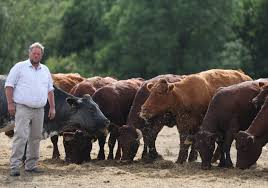
Beef producers across the United Kingdom are grappling with mounting cost pressures as extreme and erratic weather patterns disrupt forage production and tighten livestock margins. A prolonged drought followed by intense rainfall has significantly reduced hay yields, inflated feed expenses, and constrained overall beef output—raising concerns about potential retail price increases in the months ahead.
The recent sequence of dry conditions during key grass-growing periods severely curtailed pasture regeneration across England, Wales, and parts of Scotland. Many producers were forced to utilize winter forage reserves months ahead of schedule. Subsequently, heavy rainfall complicated haymaking operations, lowering both the quantity and nutritional quality of stored silage and hay. Waterlogged fields also limited grazing access, further increasing reliance on purchased concentrates.
According to industry representatives from the National Farmers’ Union, feed costs now represent one of the most acute financial pressures on cattle producers. With domestic forage supplies constrained, farmers are increasingly dependent on externally sourced feed, which remains sensitive to global grain markets and currency fluctuations. Higher energy and fertilizer costs have compounded the strain, elevating overall production expenses.
The climate volatility is also affecting herd management decisions. Some farmers are reportedly reducing herd sizes to manage cash flow and mitigate risk exposure, a move that could tighten future beef supply. Lower slaughter weights linked to inconsistent grazing conditions may further reduce output efficiency.
Retail analysts warn that sustained supply contraction could translate into upward pressure on beef prices in supermarkets. While retailers often absorb short-term volatility, prolonged input cost inflation typically feeds through the supply chain. Consumers are already facing broader food price pressures, making protein affordability a growing political and economic issue.
Beyond immediate financial impacts, producers express concern over long-term climate resilience. Investment in improved drainage systems, rotational grazing models, drought-tolerant forage species, and enhanced on-farm storage infrastructure is increasingly viewed as essential. However, access to capital remains uneven, particularly for small and medium-sized farms.
The challenges underscore a broader structural issue: livestock systems are becoming more exposed to climate variability. As policymakers in the UK refine agricultural transition frameworks post-Brexit, balancing environmental sustainability with farm profitability remains a central objective.
For British beef farmers, the current season serves as a stark reminder that climate extremes are no longer episodic anomalies but recurring operational risks—reshaping cost structures, production planning, and ultimately, market prices across the supply chain.


 By
By