

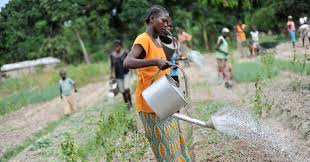
Water security emerged as the central theme at a high-level global agriculture ministers’ forum, where representatives from more than 60 countries agreed that water-centred policies must become a cornerstone of future food systems. Ministers emphasized that sustainable water governance is no longer a peripheral environmental issue but a foundational pillar of global food security.
The discussions highlighted the growing strain on freshwater resources due to climate change, population growth, industrial expansion, and competing land-use demands. Increasingly erratic rainfall patterns, prolonged droughts, and extreme weather events are disrupting crop cycles and reducing agricultural productivity in both developed and developing regions.
Delegates underscored that agriculture accounts for roughly 70% of global freshwater withdrawals, making it the most water-dependent sector. As a result, improving irrigation efficiency, promoting water-smart cropping systems, and strengthening watershed management were identified as urgent priorities. Many ministers called for greater investment in precision irrigation technologies, rainwater harvesting infrastructure, and climate-resilient crop varieties.
The forum also referenced international cooperation frameworks aligned with the Food and Agriculture Organization of the United Nations, which continues to advocate integrated water resource management within agricultural policy planning. Participants noted that without coordinated governance structures, fragmented water policies risk undermining long-term production stability.
Special attention was given to transboundary water systems, where shared river basins require cooperative agreements to avoid resource conflicts and ensure equitable access. Ministers acknowledged that water diplomacy and agricultural planning must be increasingly aligned, particularly in water-stressed regions of Africa, the Middle East, and parts of Asia.
Smallholder farmers were highlighted as particularly vulnerable to water shortages. Limited access to irrigation infrastructure and financing mechanisms can exacerbate rural poverty and reduce resilience to climate shocks. Several countries proposed expanding climate-adaptive insurance schemes and targeted subsidy programs to support water-efficient farming practices.
Food security implications remain significant. Water shortages directly affect staple crop yields, livestock health, and overall food supply stability. With global demand projected to rise sharply by 2050, ministers agreed that failure to secure sustainable water resources could intensify food price volatility and increase dependency on imports.
The forum concluded with a shared commitment to mainstream water governance into national agricultural strategies. Participants agreed that safeguarding water resources is inseparable from safeguarding food production systems, rural livelihoods, and long-term economic stability.
As climate pressures mount, the consensus among global agriculture leaders is clear: water management is no longer a technical sub-sector—it is a strategic imperative at the heart of global food security planning.


 By
By











