

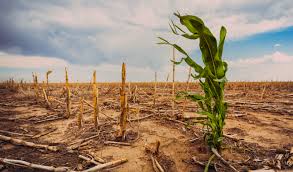
Broad scientific assessments are reinforcing growing concerns that climate change is exerting escalating pressure on global crop yields, undermining the productivity of staple food systems at a time when global demand continues to rise. Researchers caution that rising temperatures, shifting rainfall patterns, and more frequent extreme weather events are suppressing potential yields across major agricultural regions, threatening food security for millions.
Recent analyses highlight that temperature increases are already reducing productivity in crops such as wheat, maize, rice, and soybeans by narrowing the optimal growing window and accelerating crop maturity. Heat stress during critical growth stages—particularly flowering and grain filling—has been linked to measurable yield losses in both temperate and tropical production zones. Scientists warn that without adaptation measures, these temperature-driven declines will intensify in the coming decades.
In parallel, precipitation patterns are becoming increasingly unpredictable. More severe droughts, prolonged dry spells, and erratic monsoon behaviour are disrupting planting schedules and reducing soil moisture availability. At the same time, extreme rainfall events are contributing to floods, waterlogging, and erosion, damaging standing crops and degrading arable land. Many rainfed farming systems—especially in Africa and South Asia—are already experiencing heightened vulnerability, as they lack irrigation infrastructure to buffer against climatic extremes.
The assessments also highlight the compounding effects of climate change on pests, diseases, and weed pressure. Warmer temperatures are enabling the expansion of pest ranges into new regions and accelerating reproduction cycles, while plant diseases are emerging more frequently under humid and heat-stressed conditions. These biological threats further erode yields and increase the cost of crop protection.
Scientists and policymakers emphasize that adaptation strategies are essential. Investments in climate-resilient crop varieties, precision water management, soil health improvement, and digital decision-support tools could help stabilize production. Climate-smart practices—including conservation agriculture, diversified cropping systems, and improved nutrient management—are increasingly recognized as vital tools for maintaining productivity under volatile conditions.
However, experts stress that adaptation alone is not sufficient. Without decisive global action to reduce greenhouse gas emissions, the scale and frequency of climate-related shocks could exceed the capacity of food systems to absorb them.
As climate risks continue to mount, the latest assessments underscore the urgent need for coordinated global responses to safeguard crop productivity, stabilize food supply chains, and protect vulnerable communities dependent on agriculture.


 By
By











