

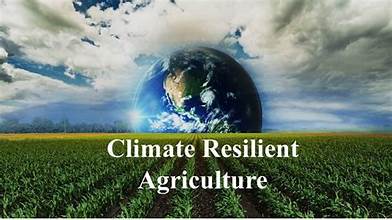
Governments and international organizations are increasingly prioritizing climate resilience in agricultural policy as extreme weather events, prolonged droughts, floods, and rising temperatures continue to threaten global food production. Policymakers are placing greater emphasis on developing drought-tolerant crops, promoting climate-smart farming practices, and building more resilient food systems to safeguard future food security.
Across many regions, changing weather patterns have exposed the vulnerability of traditional farming methods, prompting renewed investment in research and innovation. Agricultural scientists are working to develop crop varieties that can withstand heat stress, water scarcity, and unpredictable climatic conditions while maintaining stable yields.
Climate-smart agriculture has emerged as a key strategy for improving farm resilience and reducing environmental impacts. Practices such as precision irrigation, conservation agriculture, integrated nutrient management, crop diversification, and digital weather advisory services are being promoted to help farmers adapt to evolving climate challenges while using resources more efficiently.
Governments are also expanding support for sustainable water management, early warning systems, and climate-risk insurance to protect farmers from weather-related losses. International organizations encourage collaboration among countries to share technology, research, and best practices that strengthen agricultural resilience and improve long-term productivity.
Building resilient food systems extends beyond farm production. Policymakers are focusing on strengthening supply chains, reducing post-harvest losses, improving storage infrastructure, and enhancing market access to ensure that food remains available even during periods of climatic disruption.
Experts believe that integrating climate adaptation into agricultural planning will be essential to meeting the food demands of a growing global population while preserving natural resources. As climate risks intensify, investments in resilient farming systems and sustainable agricultural innovation are expected to play a crucial role in supporting farmers, stabilizing food markets, and enhancing global food security.


 By
By











