

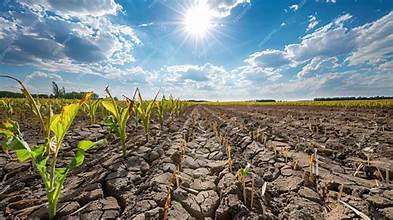
Farmers across several parts of Europe are facing mounting challenges as repeated heatwaves, prolonged dry conditions and water shortages put pressure on crops and livestock. The extreme weather is affecting agricultural production in major farming regions and raising concerns about lower yields, higher production costs and food supply risks.
France is among the countries facing significant difficulties. The country’s maize production has been heavily affected by heat and a lack of rainfall, with the latest estimates indicating that the harvest could be around 35% lower than in 2025. Maize requires sufficient water during key stages of growth, making the crop particularly vulnerable to prolonged drought and extreme temperatures.
Italy is also experiencing serious agricultural impacts. Rice, corn and soybean producers in several areas are dealing with high temperatures and limited water availability. Reduced moisture in the soil can restrict plant growth, while extreme heat during critical development stages can lower yields and affect crop quality.
The consequences are not limited to crop production. Livestock farmers are also dealing with heat stress, which can reduce animal feed intake, growth and milk production. Poultry are particularly vulnerable to extreme temperatures because high heat can affect their health, productivity and survival rates if cooling systems are inadequate.
Water availability has become a major concern for farmers in drought-affected regions. Irrigation demand rises sharply during heatwaves, while reservoirs and other water sources can come under additional pressure. Farmers may be forced to reduce irrigation or prioritise certain crops, potentially affecting overall production.
The situation is also creating financial challenges. Lower yields can reduce farm income at a time when producers are already facing expenses related to irrigation, animal cooling, feed, energy and other inputs. Repeated extreme-weather events could make agricultural planning increasingly difficult.
European farmers are responding through measures such as improved irrigation management, drought-tolerant crop varieties, soil moisture conservation and adjustments to planting schedules. Livestock producers are also increasing access to drinking water, shade, ventilation and cooling systems to reduce heat stress.
The latest conditions highlight the growing vulnerability of European agriculture to climate extremes. While individual weather events can vary from one region to another, repeated heatwaves and droughts can have a cumulative impact on farming systems.
For policymakers, the situation is increasing the importance of investments in water management, climate-resilient agriculture, crop research and support mechanisms for farmers affected by extreme weather.
With temperatures and rainfall patterns becoming increasingly unpredictable, European agriculture is likely to face greater pressure to adapt. Building stronger and more climate-resilient farming systems will be crucial for protecting farmer livelihoods and maintaining stable food production in the years ahead.


 By
By





 ulabetcasino says:





