

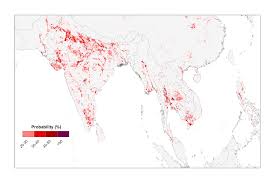
The Food and Agriculture Organization (FAO) has released a new set of global agricultural risk maps identifying regions that are most vulnerable to El Niño-related droughts, urging governments, farmers, and agricultural agencies to take immediate preparedness measures. The maps are designed to help countries anticipate climate-related risks and implement strategies that can reduce the impact of extreme weather on food production and rural livelihoods.
According to the FAO, the latest assessment identifies areas where reduced rainfall, prolonged dry spells, and rising temperatures are likely to affect crop production and livestock grazing during the upcoming agricultural seasons. The organization emphasized that early planning and coordinated action can significantly reduce economic losses and strengthen food security.
Risk Maps Provide Early Warning
The newly released maps use climate forecasts, rainfall projections, historical weather data, and agricultural information to identify regions at the highest risk of experiencing drought conditions associated with El Niño. These tools are intended to support policymakers, agricultural extension agencies, disaster management authorities, and farmers in making timely decisions.
The FAO said that early warning systems are one of the most effective ways to minimize the impact of climate-related disasters. By identifying vulnerable regions in advance, governments can prepare emergency response plans, improve water management, distribute drought-tolerant seeds, and strengthen support for farming communities before conditions worsen.
Agriculture Faces Significant Challenges
El Niño is a naturally occurring climate phenomenon that develops when sea surface temperatures in the central and eastern Pacific Ocean become warmer than normal. This disrupts global weather patterns, often leading to below-average rainfall in many agricultural regions while causing floods in others.
The FAO warns that reduced rainfall and prolonged drought may significantly lower the productivity of major food crops such as rice, maize, wheat, and pulses. Water shortages during critical crop growth stages can reduce yields, delay planting, and increase the risk of crop failure.
In addition to crop production, pasture lands used for livestock grazing may also experience slower growth due to limited soil moisture. Reduced pasture availability can affect dairy and meat production by lowering animal nutrition and increasing feed costs for farmers.
Farmers Encouraged to Take Preventive Measures
The FAO is encouraging farmers to adopt climate-smart agricultural practices that can improve resilience against drought and heat stress. Recommended measures include conserving soil moisture through mulching, adopting efficient irrigation methods, planting drought-tolerant crop varieties, adjusting sowing schedules based on weather forecasts, and diversifying crops to reduce climate-related risks.
Livestock farmers are also advised to secure adequate fodder reserves, improve water storage facilities, and closely monitor pasture conditions to minimize the impact of prolonged dry weather.
Agricultural experts stress that preparedness is far more effective and less costly than responding after drought conditions have already caused significant damage.
Governments Asked to Strengthen Preparedness
The FAO has called on national governments to enhance their drought preparedness strategies by improving weather monitoring systems, strengthening agricultural advisory services, expanding irrigation infrastructure, and ensuring timely availability of seeds, fertilizers, and financial assistance for affected farmers.
Authorities are also encouraged to maintain strategic food reserves and develop contingency plans to stabilize food supplies if agricultural production declines. In vulnerable regions, social protection programs and crop insurance schemes can help farming families recover more quickly from climate-related losses.
Protecting Global Food Security
The organization noted that climate-related agricultural disruptions can have far-reaching consequences beyond farming communities. Lower crop production may reduce food availability, increase market prices, and place additional pressure on food-importing countries.
As climate variability becomes more frequent and severe, improving resilience in agriculture has become a global priority. Investments in climate-resilient farming systems, digital weather services, sustainable water management, and research into stress-tolerant crop varieties are expected to play a crucial role in protecting future food production.
Early Action Can Reduce Losses
The FAO emphasized that the newly released agricultural risk maps should serve as a practical planning tool rather than a cause for alarm. By acting on early warnings, governments and farmers can reduce the effects of El Niño, protect agricultural productivity, and safeguard rural livelihoods.
The organization concluded that collaboration between governments, research institutions, agricultural agencies, and farming communities will be essential to strengthen resilience against climate-related challenges. Timely preparedness, improved resource management, and climate-smart farming practices can help minimize the impact of El Niño and ensure more stable food production in the years ahead.


 By
By











