Ghana has announced a major investment of approximately US$3 billion in commercial agriculture as part of its broader economic transformation programme for 2027–2030. The initiative aims to increase domestic food production, reduce dependence on imported agricultural products, expand agro-processing and create employment opportunities across the country.
Finance Minister Dr Cassiel Ato Forson announced the agricultural investment while presenting Ghana’s 2027 Budget Statement and Economic Policy to Parliament on November 12. The allocation forms part of the government’s proposed US$10 billion New Economy, New Ghana: Jobs and Prosperity programme, which will focus on strengthening productive industries and increasing exports.
Agriculture accounts for approximately 20% of Ghana’s economy, nearly 40% of employment and around 25% of export earnings. However, the country continues to spend billions of dollars annually importing food and agricultural products that could potentially be produced domestically.
The government believes that strengthening local agricultural value chains will help retain more economic value within the country, support rural communities and reduce exposure to international food-price fluctuations.
Eight Priority Agricultural Industries
The US$3 billion programme will focus on eight integrated agricultural industries: rice, sugar, poultry, maize and soybean feed, aquaculture, oil palm, vegetables and cocoa value addition.
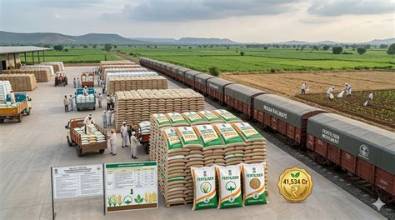
The proposed approach goes beyond increasing farm production. It aims to establish an integrated farm-to-market system connecting farmers with land, irrigation facilities, improved seeds and breeds, mechanisation, extension services, storage, processing, packaging, transportation and reliable markets.
The government also plans to connect commercial anchor farms with organised outgrower networks, creating opportunities for smallholder farmers to participate in larger agricultural value chains.
Rice and Sugar Self-Sufficiency Targets
Rice production is one of the programme’s major priorities. Ghana plans to bring an additional 100,000 hectares under rice cultivation, targeting average yields of five to six tonnes per hectare. The initiative is expected to generate approximately 125,000 jobs.
From 2027, rice import licences will be linked to purchases from verified local farmers and millers. The government has also announced its intention to prohibit commercial rice imports by 2030, supported by increased domestic production, milling capacity, storage and distribution infrastructure.
In the sugar industry, the target is to achieve self-sufficiency by 2030. Planned interventions include irrigated sugarcane production zones, commercial plantations, organised outgrower schemes and investment in processing facilities.
Boosting Poultry, Aquaculture and Oil Palm
The poultry programme will cover the entire production chain, including breeder farms, hatcheries, feed manufacturing, veterinary services, processing plants and cold-storage infrastructure.
Commercial maize and soybean production clusters will also be developed to supply animal-feed manufacturers and help reduce poultry production costs.
In aquaculture, the government intends to expand domestic fish production and strengthen processing and storage facilities. Oil palm and vegetable production will receive support through plantation development, irrigation and improved agricultural infrastructure.
The Pwalugu Multipurpose Dam is another major component of the agricultural investment strategy. The project is expected to support irrigation for approximately 25,000 hectares, with the government planning to invest around US$1 billion in its development.
Expanding Domestic Cocoa Processing
Ghana also plans to increase the domestic processing of cocoa beans, one of its most important agricultural export commodities. The government has set a target of processing at least 50% of its cocoa locally by 2028 and reaching 100% by 2030.
The strategy aims to expand production of higher-value products such as cocoa butter, cocoa powder, chocolate and other derivatives rather than relying primarily on exports of raw cocoa beans.
Implementation Will Determine Success
The investment plan reflects Ghana’s ambition to transform agriculture into a commercially organised, employment-generating sector. However, achieving its targets will depend on effective implementation, affordable financing, reliable irrigation, modern infrastructure, technology adoption and strong participation from private investors and farmers.
If successfully implemented, the programme could strengthen Ghana’s food security, expand agro-industrial activity and create new opportunities across rural economies.
The initiative also highlights a wider development priority across Africa: reducing food import dependence by investing in domestic production, agricultural infrastructure and value addition.

 By