

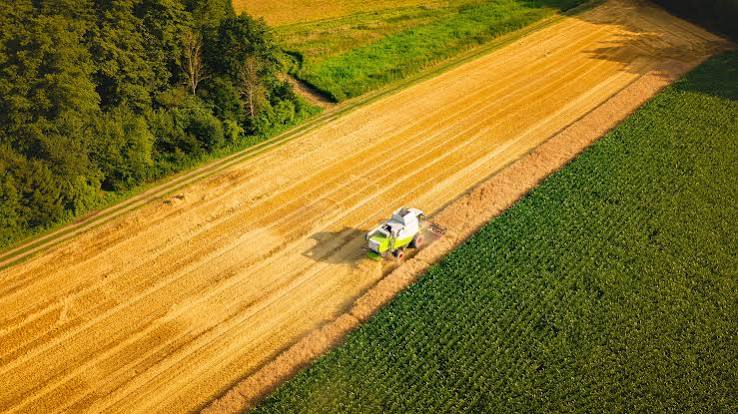
Leading agribusiness companies, agricultural technology providers, and industry experts are placing climate resilience, biological crop solutions, efficient water management, and sustainable production at the center of their long-term strategies as farmers worldwide face rising input costs, unpredictable weather patterns, and growing environmental challenges. The evolving priorities reflect a broader transformation in global agriculture, where innovation and sustainability are increasingly viewed as essential for ensuring food security and maintaining farm profitability.
Industry leaders say the agricultural sector is entering a new phase in which climate adaptation is no longer optional but a business necessity. Rising temperatures, prolonged droughts, floods, shifting rainfall patterns, and extreme weather events are disrupting agricultural production across major farming regions, forcing producers and agribusinesses to rethink traditional farming practices and invest in more resilient production systems.
One of the key areas receiving increased attention is the development of biological crop solutions, including biostimulants, biofertilizers, and biopesticides. These environmentally friendly products are gaining popularity as farmers seek to improve crop health, enhance soil fertility, and reduce dependence on conventional chemical inputs. Agricultural scientists believe biological solutions can strengthen crop resilience against environmental stress while supporting sustainable farming practices and improving long-term soil health.
Water management has also become a strategic priority for the global agribusiness sector. With freshwater resources under increasing pressure due to climate change and expanding agricultural demand, companies are investing in advanced irrigation technologies, precision water management systems, and digital monitoring tools that enable farmers to optimize water use. Efficient irrigation methods such as drip and sprinkler systems are helping producers conserve water while maintaining crop productivity in water-scarce regions.
Rising fertilizer, fuel, and labor costs continue to challenge farm profitability worldwide. Agricultural producers are responding by adopting precision agriculture technologies that improve resource efficiency and reduce production expenses. Satellite imagery, drones, artificial intelligence, soil sensors, and data-driven farm management platforms are allowing growers to make more informed decisions regarding irrigation, nutrient application, pest control, and harvesting operations.
Agribusiness companies are also increasing investments in research and development to produce climate-resilient crop varieties capable of tolerating drought, heat, flooding, and emerging pest pressures. Advances in plant breeding, biotechnology, and genomic research are expected to play an increasingly important role in helping agriculture adapt to changing climatic conditions while sustaining global food production.
Sustainability has become a central objective across agricultural supply chains. Food manufacturers, grain traders, retailers, and exporters are encouraging farmers to adopt regenerative agricultural practices that improve soil health, increase biodiversity, reduce greenhouse gas emissions, and enhance carbon sequestration. These practices include conservation tillage, crop rotation, cover cropping, integrated nutrient management, and responsible water stewardship.
Industry experts note that financial institutions and investors are increasingly linking agricultural financing to sustainability performance. Farms that implement climate-smart practices and meet environmental standards may gain improved access to investment, insurance, and premium markets as global demand for sustainably produced food continues to grow.
Digital agriculture is further accelerating the transition toward more resilient farming systems. Cloud-based farm management platforms, remote sensing technologies, weather forecasting tools, and predictive analytics are helping producers anticipate climate risks, optimize production decisions, and improve operational efficiency. Real-time access to weather and market information is enabling farmers to respond more effectively to changing conditions.
Collaboration between governments, research institutions, agribusiness companies, and farmers is also expanding. Public-private partnerships are supporting innovation in sustainable agriculture through research funding, technology transfer, farmer training, and infrastructure development. Experts believe that stronger cooperation across the agricultural value chain will be essential to achieving long-term food security while reducing agriculture’s environmental footprint.
Agricultural analysts emphasize that the challenges facing global farming—including climate change, volatile commodity markets, geopolitical uncertainty, and rising production costs—require integrated solutions rather than isolated interventions. Investments in resilient infrastructure, biological technologies, renewable energy, precision agriculture, and sustainable resource management are expected to define the future direction of the global agribusiness industry.
As agriculture adapts to an increasingly uncertain climate and economic landscape, industry leaders remain optimistic that innovation, sustainability, and collaboration will help farmers overcome emerging challenges. By prioritizing climate resilience, biological crop solutions, water conservation, and efficient production systems, the global agribusiness sector aims to build a more productive, environmentally responsible, and resilient food system capable of feeding a growing world population in the decades ahead.


 By
By











