

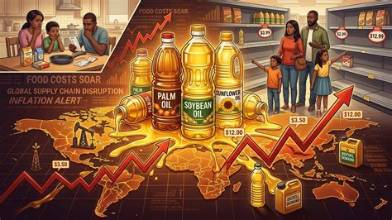
Global food commodity prices are showing signs of renewed pressure, raising concerns for consumers, farmers and policymakers across the world. According to the Food and Agriculture Organization of the United Nations (FAO), its Food Price Index tracks monthly changes in international prices of a basket of globally traded food commodities.
The latest market developments come amid a complex combination of weather risks, changing supply conditions, energy-market volatility and geopolitical uncertainty. FAO’s June 2026 data showed the Food Price Index at 130.3 points, 2.2 percent higher than a year earlier, while cereal prices declined during the month.
Cereal Markets Remain Closely Watched
Cereal prices remain one of the most important factors influencing global food security. Wheat, maize and rice markets are particularly sensitive to weather conditions, production forecasts, export availability and international trade.
FAO has projected that global cereal production in 2026/27 will remain historically high, although it is expected to ease from record levels. Ample stocks are providing some protection against potential supply disruptions, but weather developments—including growing concerns over El Niño—remain a major risk for agricultural markets.
A prolonged period of extreme heat, drought or excessive rainfall could reduce yields in major producing regions and put additional pressure on international prices.
Vegetable Oils Add to Market Pressure
Vegetable oils have emerged as another important source of price volatility. Palm, soybean, sunflower and rapeseed oils are influenced not only by food demand but also by biofuel policies, crude oil prices, production conditions and export availability.
FAO reported that its Vegetable Oil Price Index increased sharply in June 2026, rising 3.8 percent from May. Higher palm and rapeseed oil prices were important contributors, while expectations surrounding biofuel demand also influenced market conditions.
Higher vegetable-oil prices can have a wider impact because these commodities are used extensively in household food products, food processing and industrial applications.
Sugar Prices Face Weather Uncertainty
Sugar markets are also being closely monitored as weather risks increase. FAO noted that concerns about the potential impact of El Niño on sugar production in major producing countries such as India and Thailand helped limit the decline in international sugar prices in June.
Any significant reduction in sugarcane production could tighten global supplies and influence prices in international markets.
Food Security Remains a Key Concern
The latest developments highlight the fragile balance between global food supply and demand. Although historically high cereal production and ample stocks provide an important buffer, international food markets remain exposed to extreme weather, conflicts, energy-price movements, fertilizer costs and disruptions to global trade.
For developing countries that rely heavily on food imports, higher international commodity prices can increase import bills and put additional pressure on household food budgets.
FAO has emphasized that global food markets are increasingly exposed to multiple shocks, making transparent markets, reliable trade flows and timely information essential for strengthening food-system resilience.
With weather risks building and commodity markets responding differently across crops, the coming months will be critical for global agriculture. Strong production and adequate stocks could help contain price pressures, but any major weather-related disruption could quickly change the outlook.


 By
By











