

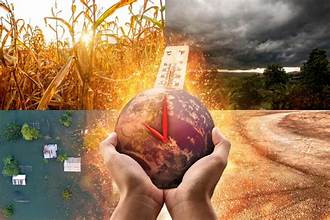
Global food security remains under close observation as agricultural experts continue to monitor the development of El Niño, a climate phenomenon that has the potential to disrupt crop production and international food markets. Although global grain inventories are currently at comfortable levels, specialists caution that prolonged droughts, extreme weather events, or trade restrictions could still pose challenges for food-importing countries.
El Niño, caused by the periodic warming of surface waters in the central and eastern Pacific Ocean, influences weather patterns around the world. It often leads to reduced rainfall and drought in some agricultural regions while bringing excessive rainfall and flooding to others. These changing weather conditions can significantly affect the production of staple crops such as wheat, rice, maize (corn), and soybeans.
At present, strong global stocks of major grains are helping provide a buffer against potential production losses. Favorable harvests in recent seasons have increased inventories, allowing international markets to remain relatively stable despite climate uncertainties. Analysts believe these reserves can help limit sudden price spikes if crop yields decline in some regions.
However, experts emphasize that food security depends not only on production but also on the smooth functioning of global trade. If prolonged droughts reduce harvests in major exporting countries or governments introduce export restrictions to protect domestic supplies, food-importing nations could face increased procurement costs and reduced availability of essential commodities.
Many developing countries rely heavily on imported cereals to meet domestic food demand. Rising international prices or disruptions in grain shipments could place additional pressure on national food security programs and household budgets, particularly in regions already vulnerable to economic or climatic challenges.
Agricultural scientists are therefore closely monitoring seasonal weather forecasts, soil moisture levels, crop development, and reservoir conditions in major food-producing regions. Early warning systems and satellite-based monitoring technologies are helping governments and farmers assess potential risks and prepare timely responses to changing climatic conditions.
Farmers worldwide are increasingly adopting climate-smart agricultural practices to reduce weather-related risks. Improved drought-tolerant crop varieties, precision irrigation systems, efficient water management, conservation agriculture, and better weather forecasting tools are helping producers maintain productivity even under challenging environmental conditions.
International organizations continue to encourage governments to strengthen strategic grain reserves and maintain open agricultural trade. Stable trade flows allow surplus-producing countries to supply food-deficit regions, reducing the impact of localized production shortfalls and supporting global food security.
Market analysts note that while climate risks remain significant, improvements in agricultural technology and diversified global production have made food systems more resilient than in previous decades. Advances in seed genetics, mechanization, digital agriculture, and crop monitoring have enhanced farmers’ ability to respond to changing weather patterns and improve yields.
Governments are also investing in long-term measures to strengthen agricultural resilience. These include expanding irrigation infrastructure, improving rural storage facilities, supporting agricultural research, and promoting sustainable farming practices that conserve natural resources while increasing productivity.
Food manufacturers, grain traders, and importers are expected to continue monitoring global weather developments over the coming months. Procurement strategies may be adjusted based on crop forecasts, market conditions, and potential supply risks associated with El Niño.
Experts stress that international cooperation will remain essential in addressing future food security challenges. Transparent trade policies, coordinated humanitarian support, and continued investment in climate adaptation can help reduce the impact of weather-related disruptions on global food supplies.
Overall, while healthy grain inventories currently provide confidence in the stability of global food markets, agricultural experts remain vigilant. The evolution of El Niño, combined with weather extremes and possible trade disruptions, will continue to shape the global food security outlook in the months ahead. Continued preparedness and collaboration will be key to ensuring reliable food supplies for both producing and importing nations.


 By
By











