

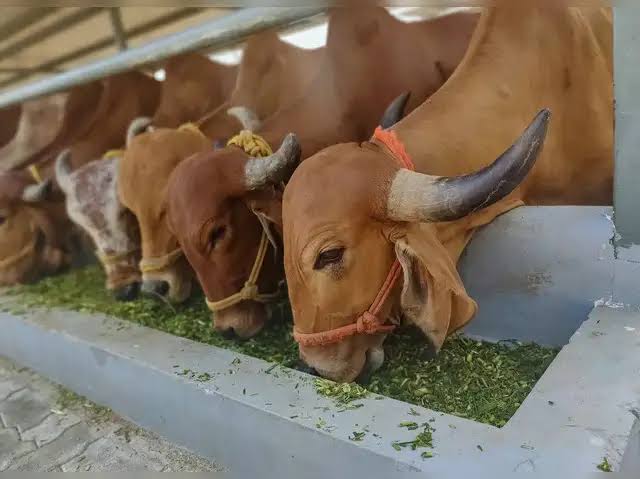
A new international report has revealed that the global livestock population has increased by nearly 50% since 2006, reflecting rising demand for meat, milk, and other animal-based products. While the expansion has helped improve food availability and rural livelihoods in many parts of the world, experts warn that the rapid growth is placing unprecedented pressure on biodiversity, land resources, freshwater supplies, and the global climate.
The findings have renewed calls for governments, policymakers, farmers, and the private sector to accelerate investment in sustainable livestock production systems that can meet growing food demand while reducing environmental impacts.
Rising Demand Drives Livestock Expansion
The global livestock sector has experienced remarkable growth over the past two decades, driven by population growth, urbanization, rising incomes, and changing dietary preferences. Developing economies in Asia, Africa, and Latin America have witnessed significant increases in the consumption of meat, dairy products, and eggs as living standards continue to improve.
To meet this demand, farmers worldwide have expanded cattle, poultry, sheep, goat, and pig production. Livestock farming now represents one of the fastest-growing segments of global agriculture, contributing significantly to food security, employment, and rural economic development.
However, experts caution that continued expansion without sustainable management could intensify pressure on already fragile natural ecosystems.
Growing Pressure on Land and Biodiversity
One of the report’s major concerns is the increasing demand for agricultural land. Large areas of forests, grasslands, and wetlands have been converted into grazing land or crop fields dedicated to producing animal feed such as maize and soybeans.
This land-use change has contributed to habitat loss for wildlife and accelerated the decline of biodiversity in many regions. Natural ecosystems that support pollinators, birds, insects, and other wildlife are increasingly being fragmented or replaced by intensive agricultural systems.
Environmental scientists warn that protecting biodiversity will require balancing livestock production with conservation efforts and more efficient land management practices.
Water Resources Under Stress
Livestock production is also placing growing pressure on global freshwater resources. Water is required not only for animals to drink but also for producing feed crops, cleaning facilities, and processing animal products.
In regions already facing water scarcity, expanding livestock operations can intensify competition for limited water supplies between agriculture, households, and industry.
Experts recommend adopting water-efficient farming technologies, improving irrigation systems, and selecting feed crops that require less water to help reduce the sector’s overall water footprint.
Climate Change Challenges
The livestock industry remains a significant contributor to greenhouse gas emissions, particularly methane from cattle and other ruminants. Methane is a potent greenhouse gas that has a much higher warming effect than carbon dioxide over the short term.
In addition to methane emissions, livestock production generates emissions from feed cultivation, manure management, transportation, and land-use changes.
The report emphasizes that improving feed quality, adopting better manure management systems, enhancing animal health, and investing in climate-smart technologies can substantially reduce emissions while maintaining productivity.
Importance of Sustainable Livestock Systems
Despite environmental concerns, experts stress that livestock remain essential for global nutrition and rural livelihoods. Animal agriculture provides high-quality protein, milk, eggs, wool, leather, and income for hundreds of millions of farming households worldwide.
Rather than reducing livestock production altogether, the report advocates for more sustainable production systems that increase efficiency while minimizing environmental impacts.
Key recommendations include:
- Improving feed efficiency to reduce resource use.
- Promoting rotational grazing and better pasture management.
- Conserving biodiversity through integrated land-use planning.
- Investing in climate-smart livestock technologies.
- Reducing food loss and waste across supply chains.
- Encouraging precision livestock farming using digital technologies.
These measures can help farmers produce more with fewer natural resources while lowering emissions.
Opportunities Through Innovation
Technological innovation is playing an increasingly important role in making livestock farming more sustainable. Precision livestock management, artificial intelligence, remote sensing, wearable animal health monitors, and improved breeding programs are enabling farmers to optimize productivity while reducing environmental impacts.
Researchers are also developing alternative feed additives that can significantly reduce methane emissions from cattle without affecting animal performance.
In many countries, governments are supporting research into sustainable livestock systems through climate adaptation programs and green agricultural policies.
Balancing Food Security and Environmental Protection
The report highlights the challenge of balancing growing global food demand with the need to protect natural resources. As the world’s population continues to expand, demand for animal-based foods is expected to remain strong over the coming decades.
Meeting this demand sustainably will require coordinated action involving governments, researchers, agricultural industries, financial institutions, and farming communities.
Policies that encourage responsible land use, efficient resource management, improved animal welfare, and investment in sustainable technologies will be critical for achieving long-term food security.
Looking Ahead
The nearly 50% increase in global livestock numbers since 2006 illustrates both the success of agriculture in meeting rising food demand and the environmental challenges that accompany such rapid expansion. While livestock production remains a cornerstone of global agriculture, its future will depend on adopting practices that protect biodiversity, conserve water, reduce greenhouse gas emissions, and enhance resource efficiency.
As countries work toward climate goals and sustainable development, investment in resilient and environmentally responsible livestock systems will be essential. The report concludes that the future of global food security lies not only in producing more food but in producing it in ways that safeguard the planet for future generations.


 By
By


 nairabetlogin says:








