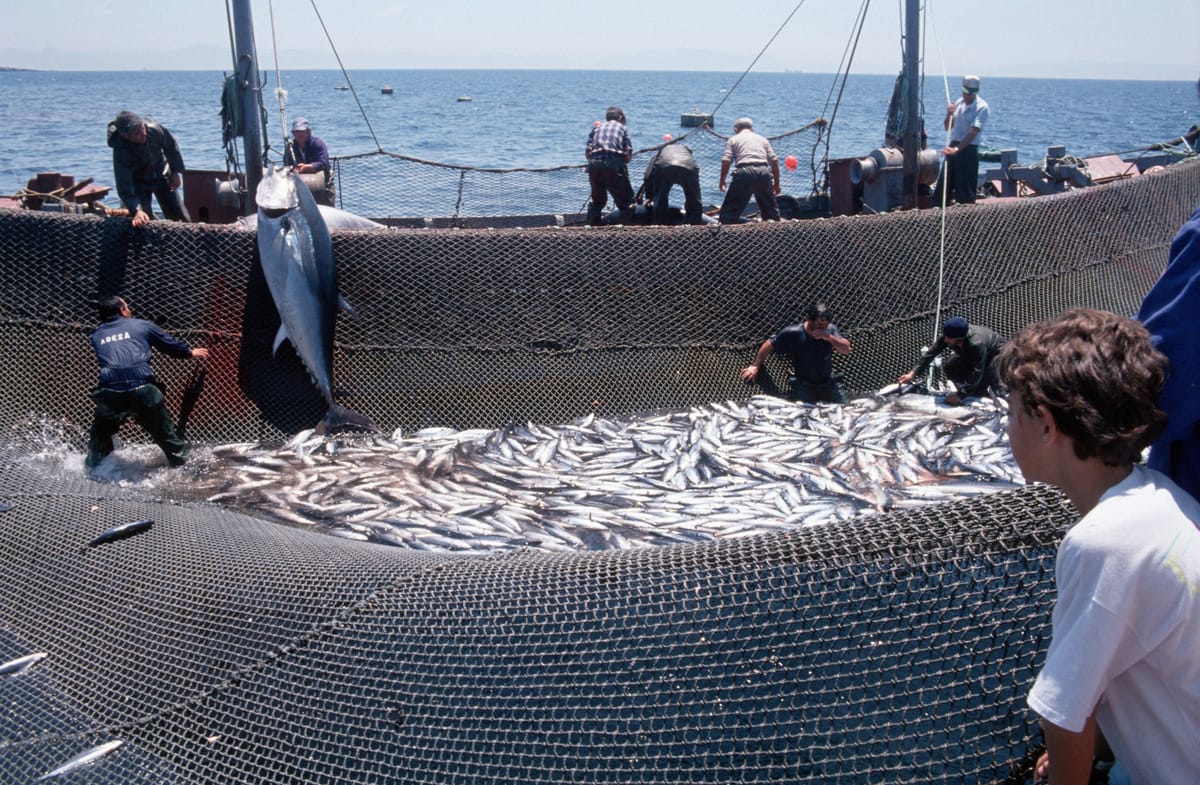
The Government of India is intensifying its efforts to safeguard marine resources and ensure the socio-economic security of traditional and small-scale fishers through the Pradhan Mantri Matsya Sampada Yojana (PMMSY), backed by the highest-ever investment of ₹20,050 crore in the fisheries sector.
Recognizing fisheries as a State subject, all coastal States and Union Territories (UTs) govern marine activities under their respective Marine Fishing Regulation Acts (MFRAs). These regulations reserve fishing areas for small-scale fishers, thereby protecting their livelihoods. The Department of Fisheries (DoF), Government of India, has also framed the National Policy on Marine Fisheries, 2017 to promote sustainable and responsible fishing across the country.
Measures for Sustainability and Conservation
To prevent overexploitation and destructive practices, the Centre has issued advisories banning juvenile fishing, paired/bull trawling, and the use of LED lights in India’s Exclusive Economic Zone (EEZ). Coastal States and UTs have been directed to enforce similar restrictions within their territorial waters. Additionally, the DoF has mandated the use of Turtle Excluder Devices (TEDs) to conserve marine turtles, supported under PMMSY with 100% financial assistance (60% Central and 40% State).
A uniform annual fishing ban of 61 days is enforced across India’s EEZ — from April 15 to June 14 on the East Coast and from June 1 to July 31 on the West Coast — to allow fish stocks to regenerate. Coastal States/UTs also implement parallel bans within their waters. During this period, traditional fishers receive livelihood and nutritional support, along with accidental insurance coverage under PMMSY.
Recent studies have shown positive results, with 91.1% of 135 assessed fish stocks in 2022 found to be sustainable, highlighting the effectiveness of these conservation measures.
Boosting Livelihoods and Resilience
Under PMMSY, India is promoting sea ranching and artificial reef installation across its coastline to restore habitats, enhance fish stocks, and secure fisher livelihoods. In addition, mariculture ventures such as seaweed cultivation and open sea cage culture are being encouraged to reduce pressure on nearshore fisheries and sustainably increase marine production.
The scheme also features the development of 100 Climate Resilient Coastal Fishermen Villages (CRCFVs) to transform them into economically vibrant hubs. These villages will benefit from modern infrastructure, economic diversification, and resilience-building measures to withstand climate change impacts.
To support deep-sea fishing, financial assistance is being extended under PMMSY for acquisition of modern vessels and upgradation of existing trawlers for export-competency. These measures aim to help traditional fishermen shift to resource-specific, sustainable fishing practices in deeper waters.
Awareness, Training, and Research
The National Fisheries Development Board (NFDB), along with research institutions such as the Fishery Survey of India, Centre for Marine Living Resources & Ecology, and various ICAR institutes, is working with State fisheries departments to promote awareness on critical threats like overfishing, habitat loss, and illegal, unreported, and unregulated (IUU) fishing. Through capacity-building workshops, training programs, and stakeholder consultations, fishers are being trained in bycatch reduction devices, sustainable fishing methods, safe handling practices, and environmental stewardship.
Towards a Sustainable Future
By combining regulation, financial support, scientific research, and community awareness, the Government of India aims to ensure the long-term sustainability of marine resources while strengthening the livelihoods of millions dependent on the fisheries sector.

 By
By