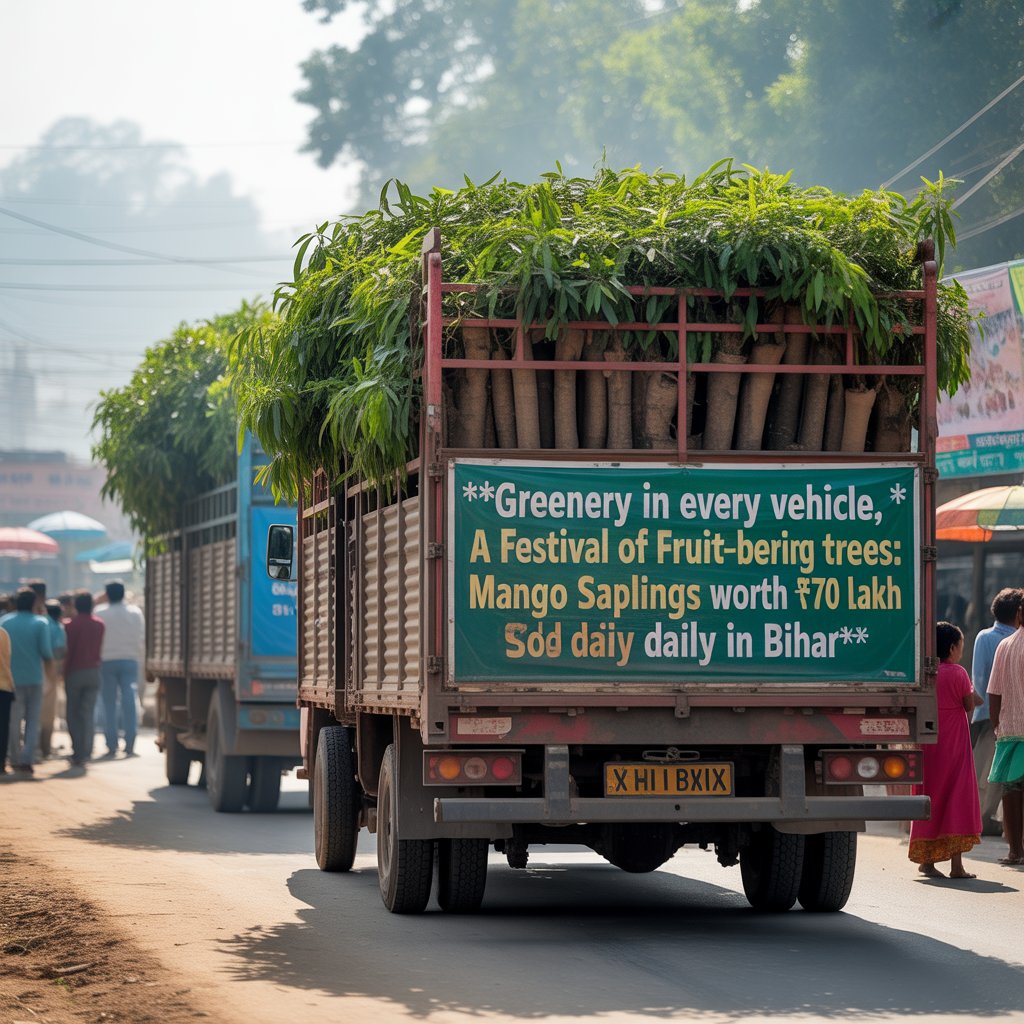
In a heartening display of environmental awareness and sustainable development, Bihar is witnessing a remarkable green revolution. Under the slogan “Greenery in Every Vehicle, A Festival of Fruit-Bearing Trees”, people across the state are actively participating in a campaign that promotes planting fruit-bearing trees—particularly mango saplings. The initiative is gaining such momentum that, according to recent figures, mango saplings worth nearly ₹70 lakh are being sold every day.
This unique green movement is turning heads and winning hearts, not only in Bihar but across the country. It represents a rare blend of economic activity, environmental consciousness, and community engagement—all rolled into one.
A Festival of Greenery
The campaign’s slogan — “Har Gaadi Mein Hariyali, Phaldaar Paudhon Ka Tyohaar” — is not just a catchy phrase; it’s a call to action. Across urban and rural Bihar, cars, bikes, and even bullock carts are now seen transporting saplings. From local farmers to urban residents, everyone seems to be embracing the movement.
The focus is on mango trees, a fruit both culturally and commercially significant in India. Nurseries across Bihar are witnessing an extraordinary surge in demand for mango saplings, and daily sales have reached an impressive ₹70 lakh. This surge is not just a sign of environmental enthusiasm but also a reflection of how tree plantation is being linked with profit and progress.
Why Mango Saplings?
The popularity of mango trees in this campaign is no coincidence. The mango is not just the “king of fruits” in India — it also symbolizes prosperity. Mango orchards are a source of long-term income for farmers, offer shade, improve air quality, and add biodiversity to the landscape.
Officials and agricultural experts point out that mango trees are relatively low-maintenance and adapt well to Bihar’s climate. In just a few years, these trees start yielding fruit, making them both environmentally and economically beneficial.
Economic Impact
With saplings worth ₹70 lakh being sold daily, the campaign is not only greening the environment but also boosting the local economy. Nurseries, small-scale entrepreneurs, and agricultural suppliers are all benefiting.
Many young people have started small plant nurseries, creating new job opportunities and fostering a plant-based startup culture in the state. In several districts, local markets now feature “green stalls” dedicated to selling mango saplings, with varieties ranging from traditional Langda and Dussehri to hybrid and high-yielding species.
Government and Community Support
The state government has played an essential role in this movement by promoting plantation drives, offering subsidies on saplings, and providing training through Krishi Vigyan Kendras (Agricultural Science Centers). In some areas, schools and colleges are distributing saplings to students to take home and plant.
Community groups and environmental NGOs are also organizing “Tree Donation Camps” where people can donate saplings to others. Religious institutions, wedding functions, and even birthday celebrations are seeing a shift—where planting a tree is becoming more meaningful than giving material gifts.
A Step Toward Climate Resilience
Experts believe this movement could become a model for other states in India. Planting fruit-bearing trees like mango not only supports biodiversity but also improves climate resilience. These trees absorb carbon dioxide, improve groundwater recharge, and prevent soil erosion.
As Bihar faces challenges such as erratic monsoons and rising temperatures, large-scale plantation of mango trees could offer a natural shield and a sustainable source of food and income.
A Cultural and Environmental Revolution
The idea of treating tree plantation as a festival is both novel and inspiring. The campaign is changing the narrative — from “save the trees” to “celebrate the trees.” Vehicles adorned with green saplings are becoming a common sight, transforming public perception and inspiring even more people to join.
Children are learning about sustainability through real-life experience, families are bonding over planting activities, and farmers are seeing the long-term value of diversified crops.
Conclusion
The slogan “Greenery in Every Vehicle, A Festival of Fruit-Bearing Trees” is more than just a campaign—it’s a movement of hope, growth, and sustainability. Bihar’s booming mango sapling sales, touching ₹70 lakh per day, show what’s possible when environmental awareness is combined with local entrepreneurship and community spirit.
If this momentum continues, Bihar may soon emerge as not only one of India’s greenest states but also a pioneer in community-led ecological change.


 By
By