The 19th Convocation Ceremony of the ICAR-Central Institute of Fisheries Education was held in a dignified and celebratory atmosphere, marking a significant milestone for India’s fisheries and aquatic sciences sector. A total of 143 students were conferred degrees in recognition of their academic excellence and research contributions.
The institute, functioning under the aegis of the Indian Council of Agricultural Research, is globally recognized as the only university dedicated exclusively to postgraduate and doctoral education across 11 specialized disciplines in fisheries science. Its academic and research programs are playing a critical role in strengthening India’s blue economy through scientific innovation and skilled human resource development.
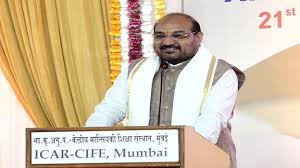
The chief guest, Dr. M. L. Jat, Secretary (DARE) and Director General, ICAR, emphasized that the fisheries sector will serve as a foundational pillar in achieving the vision of a developed India by 2047. He described innovation, entrepreneurship, and digital transformation as the principal drivers of growth in the sector. Dr. Jat highlighted the growing importance of fisheries in ensuring nutritional security, enhancing farmers’ incomes, and strengthening rural livelihoods, particularly in coastal and inland communities.
Guest of Honour Dr. Joykrishna Jena, Deputy Director General (Fisheries), encouraged graduates to pursue innovation-led research, sustainable aquaculture practices, and enterprise development. He underscored the need for a strong scientific approach and the adoption of modern technologies to propel the fisheries sector to greater heights at both national and global levels.
Director and Vice-Chancellor Dr. N. P. Sahu conferred degrees upon 94 postgraduate students and 49 Ph.D. scholars. The graduation of this cohort represents a significant addition to India’s pool of trained professionals in fisheries science, aquaculture management, aquatic health, and resource sustainability.
During the ceremony, gold medalists and outstanding research scholars were honored for their academic achievements and scientific dedication. Their contributions were acknowledged as vital steps toward transforming India’s vast aquatic resources into engines of sustainable economic growth.
The convocation concluded with a strong message that knowledge, advanced research, and technology-driven innovation will shape the future trajectory of India’s fisheries sector. With institutions like ICAR–CIFE leading capacity building and scientific advancement, the country is poised to establish a stronger global presence in fisheries education, research, and sustainable aquatic development.


 By
By