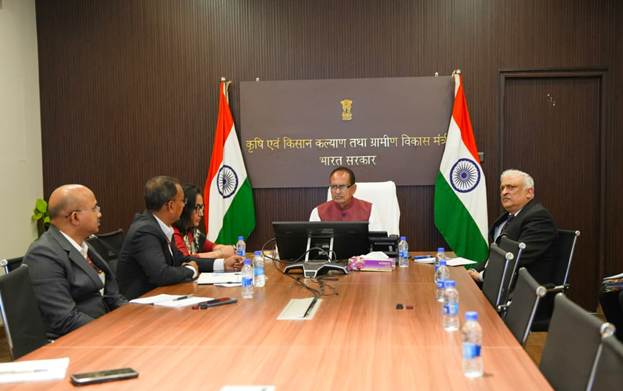
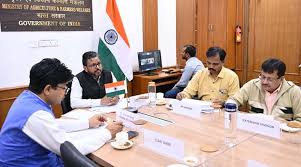
A bilateral meeting between India and Argentina was held at the Agriculture Bhawan in New Delhi to review the progress of key agricultural cooperation initiatives and strengthen ongoing collaborations. The meeting was co-chaired by Dr. P.K. Mehrda, Additional Secretary of the Department of Agriculture & Farmers’ Welfare (DA&FW), and H.E. Mariano Caucino, Ambassador of Argentina to India.
The discussions focused on expanding collaboration across agriculture technology, crop management, seed research, farm machinery, and livestock sectors. Both countries identified priority areas such as agricultural innovation, climate-smart farming, and value chain strengthening to enhance productivity and sustainability.
The Indian delegation highlighted major ongoing agricultural programs and strategies for promoting innovation through public-private partnerships. Argentina shared its expertise in agricultural research, mechanization, and agri-tech solutions, expressing a firm commitment to deepening cooperation with India.
A consensus emerged to maintain regular dialogue between expert teams from both countries to advance technical partnerships in identified areas. The discussions also underscored the importance of exploring and promoting opportunities in agricultural trade and investment, providing mutual benefits to farmers and agri-industries.
Dr. Mehrda emphasized that agricultural collaboration between India and Argentina has the potential to significantly benefit stakeholders in both countries, from smallholders to large-scale agribusinesses. Ambassador Caucino expressed confidence that future cooperation would be increasingly comprehensive and results-oriented, fostering sustainable growth and innovation in the agricultural sectors of both nations.
The meeting reinforced the commitment of India and Argentina to leverage each other’s strengths in science, technology, and agricultural practices. By focusing on innovation, climate resilience, and value chain improvements, both countries aim to create tangible benefits for farmers, strengthen food security, and enhance economic opportunities in agriculture.
This bilateral engagement marks a continued effort to build a strategic partnership in agriculture, highlighting the importance of international cooperation in addressing shared challenges such as climate change, technological advancement, and sustainable farming practices.


 By
By