The recently signed India–EU Free Trade Agreement (FTA) is expected to create significant opportunities for India’s agricultural machinery industry, according to a statement from CNH Industrial, a global leader in farm equipment and commercial vehicles.
The agreement is seen as a strategic step to strengthen India’s position as a global manufacturing and export hub, while enabling deeper technological collaboration with Europe—a key driver for mechanisation and industrial growth.
CNH’s Perspective
For CNH Industrial, the FTA aligns with its India strategy, which focuses on four pillars: “India for India,” “India for the World,” Global Capability Centre (GCC), and sourcing from India.” The agreement is expected to:
- Enhance the competitiveness of Indian-manufactured agricultural equipment, components, and powertrains in European markets.
- Facilitate the introduction and scaling of advanced European technologies and farm machinery solutions in India.
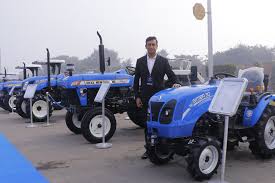
- Support higher adoption of mechanisation, particularly high-end equipment such as forage harvesters and tractors above 120 HP, which currently have limited penetration in India.
Industry Implications
The FTA is anticipated to accelerate the uptake of modern farming solutions across the country, enabling manufacturers to reach a broader and more diverse farmer base. By improving access to advanced technology and reducing trade barriers, the agreement will enhance productivity, efficiency, and sustainability in Indian agriculture.
CNH highlighted that its Pune and Greater Noida facilities already manufacture critical engine, driveline, and powertrain components for both domestic and international supply chains. The FTA is expected to further strengthen India’s role in global manufacturing, enhancing cost competitiveness and export potential.
Global Collaboration
Europe remains a key market for CNH, and the FTA opens avenues to leverage India’s manufacturing and engineering capabilities alongside Europe’s advanced portfolio. CNH noted that the agreement will positively impact product access, technology collaboration, and manufacturing scale, reinforcing India’s central role in its global strategy.
The company concluded that the India–EU FTA represents a mutually beneficial opportunity that will accelerate farm mechanisation, drive innovation, and strengthen the country’s position in global agricultural machinery trade.


 By
By