

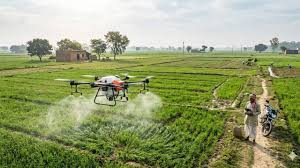
India is taking a significant step toward agricultural reform by planning to decentralize farm policymaking and empower states to design region-specific strategies. The move aims to improve productivity, enhance farmer support systems, and address the diverse agricultural needs across the country.
Traditionally, agricultural policies in India have been largely centralized, with uniform schemes applied across states despite wide variations in climate, soil types, water availability, and cropping patterns. Recognizing these differences, the government is now encouraging states to take a more active role in shaping policies tailored to local conditions.
Under the proposed approach, individual states will have greater flexibility to decide which crops to promote, how to allocate resources, and what kind of support systems to implement for farmers. For instance, water-scarce regions may focus on drought-resistant crops and efficient irrigation systems, while fertile areas can prioritize high-yield varieties and diversified farming.
Experts believe this shift could significantly improve agricultural outcomes. Region-specific planning allows for better use of natural resources, improved crop selection, and more targeted extension services. It also enables faster decision-making and policy implementation at the local level, which can be crucial during climate-related disruptions.
The decentralization effort is also expected to strengthen farmer support systems. States can design customized subsidy programs, crop insurance schemes, and market linkages that align with local realities. This could help farmers access better inputs, reduce risks, and improve their incomes.
In addition, the policy shift may encourage innovation in agriculture. States could experiment with new technologies, promote sustainable practices, and collaborate with private players and research institutions to develop localized solutions. This flexibility can drive competitiveness and modernization within the sector.
However, challenges remain. Ensuring coordination between central and state governments will be critical to avoid policy fragmentation. There are also concerns about disparities in administrative capacity among states, which could lead to uneven implementation.
Despite these concerns, the move toward state-specific farm policies reflects a broader recognition that a “one-size-fits-all” approach is no longer effective for a country as diverse as India. By aligning agricultural strategies with regional strengths and challenges, the initiative has the potential to create a more resilient and efficient farming system. As the policy framework evolves, its success will depend on effective collaboration, adequate funding, and continuous monitoring. If implemented well, this decentralized approach could mark a major turning point in India’s agricultural development and farmer welfare


 By
By











