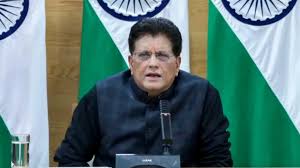
Union Minister for Commerce and Industry Piyush Goyal has reaffirmed that India will not compromise the interests of its agriculture and dairy sectors in the proposed trade agreement with the United States. His statement comes amid reports that negotiations between the two countries are nearing completion, with sensitive sectors receiving explicit safeguards.
Addressing concerns around market access and tariff concessions, Goyal emphasised that agriculture and dairy are non-negotiable priorities for the government. He underlined that these sectors are closely linked to food security, rural livelihoods, and the socio-economic stability of millions of farmers and small producers across the country. Any trade arrangement, he said, must align with India’s domestic realities and development objectives.
India’s agriculture sector employs a significant portion of the population, while the dairy industry is largely driven by small and marginal farmers and cooperative structures. According to the minister, opening these sectors to unfettered imports could expose producers to price volatility and unfair competition, potentially undermining rural incomes. As a result, India has maintained firm red lines during discussions with the US.
Goyal noted that while India is committed to strengthening trade relations with the United States, the approach remains balanced and pragmatic. The ongoing talks are focused on achieving mutually beneficial outcomes without placing undue pressure on sensitive sectors. He added that India is open to cooperation in areas such as trade facilitation, regulatory transparency, and resolving specific market access issues through technical engagement.
Reports suggest that while agriculture and dairy will remain protected, the proposed trade deal could offer new opportunities for several labour-intensive industries. Sectors such as textiles, apparel, footwear, gems and jewellery, and select manufacturing segments are expected to gain from improved access to the US market and more predictable trade conditions. These gains are seen as supporting export growth and job creation.
The minister also highlighted India’s broader trade philosophy, which prioritises inclusive growth and long-term sustainability over short-term concessions. He reiterated that trade agreements must support domestic manufacturing, encourage value addition, and strengthen India’s position in global supply chains, without compromising core national interests.
As negotiations progress, Goyal’s remarks signal continuity in India’s stance on agriculture and dairy. Observers view this clarity as an important reassurance for farmers and cooperatives, reinforcing the government’s commitment to protect sensitive sectors while advancing the overall India–US economic partnership.

 By
By