

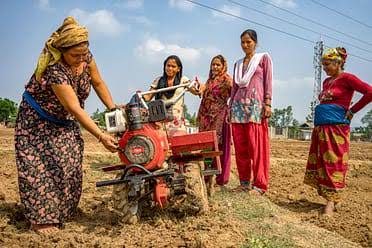
Nepal has called for greater international cooperation to accelerate the adoption of climate-smart agriculture (CSA), stressing that collective global action is essential to address the growing challenges posed by climate change to food security and sustainable farming. Speaking at an international agricultural forum, Nepal’s Agriculture Minister Gita Chaudhary highlighted the urgent need for countries to work together in promoting innovative and resilient farming practices.
The minister noted that climate change is increasingly affecting agricultural productivity through erratic rainfall, prolonged droughts, floods, rising temperatures, and the spread of pests and diseases. These challenges are particularly severe for developing countries like Nepal, where a large portion of the population depends on agriculture for their livelihoods.
Emphasizing the importance of climate-smart agriculture, Gita Chaudhary said that modern farming practices must focus on increasing productivity while conserving natural resources and reducing greenhouse gas emissions. She urged governments, international organizations, research institutions, and development partners to strengthen collaboration in technology transfer, research, capacity building, and financial support to help farmers adapt to changing climatic conditions.
Climate-smart agriculture integrates sustainable farming techniques with efficient resource management to improve resilience against climate-related risks. Practices such as drought-tolerant crop varieties, water-efficient irrigation systems, conservation agriculture, integrated nutrient management, agroforestry, and precision farming can help farmers maintain productivity while protecting the environment.
The minister also emphasized that smallholder farmers, who form the backbone of Nepal’s agricultural sector, require greater access to quality seeds, climate information services, crop insurance, affordable credit, and modern technologies. Strengthening agricultural extension services and improving farmers’ knowledge of climate-resilient practices will play a crucial role in ensuring long-term food security.
Agriculture contributes significantly to Nepal’s economy and provides employment for a large share of the country’s population. However, the sector remains highly vulnerable to climate variability due to its dependence on rainfall and mountainous terrain. Experts warn that without adequate adaptation measures, climate change could reduce crop yields, threaten rural incomes, and increase food insecurity across the region.
International agricultural experts support Nepal’s call for stronger global partnerships, noting that climate change is a shared challenge requiring coordinated solutions. Collaboration among countries can facilitate the exchange of scientific knowledge, climate-resilient technologies, sustainable farming innovations, and best agricultural practices. Increased investment in agricultural research and climate adaptation projects can also help strengthen food systems worldwide.
The minister further highlighted the importance of mobilizing climate finance to support vulnerable farming communities. Developing countries often face financial constraints in implementing large-scale climate adaptation programmes, making international funding and technical assistance essential for building resilient agricultural systems.
Experts believe that climate-smart agriculture offers a practical pathway to achieving multiple goals, including higher agricultural productivity, improved farmer incomes, environmental conservation, and reduced carbon emissions. As climate risks continue to intensify, integrating sustainability into farming practices has become increasingly important for ensuring long-term food security.
Nepal’s appeal for enhanced international cooperation underscores the growing recognition that climate change cannot be addressed by individual nations alone. Through stronger global partnerships, shared innovation, and sustained investment in climate-smart agriculture, countries can build more resilient food systems capable of meeting the challenges of a changing climate while ensuring sustainable agricultural development for future generations.


 By
By











