• Home
  • AGRI GOVT STORY
  • New Study Warns of Rising Crop Dominance Threatening Global Agricultural Sustainability
Image

New Study Warns of Rising Crop Dominance Threatening Global Agricultural Sustainability

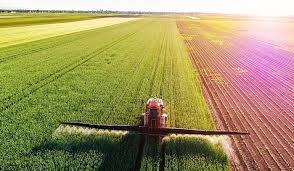
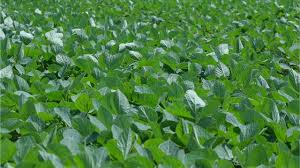
A newly released research analysis has raised alarms over the growing dominance of a small number of crop types within global industrial agriculture, highlighting significant implications for long-term sustainability and food-system resilience. According to the study, worldwide production is increasingly concentrated around a narrow portfolio of staples—particularly maize, wheat, rice, and soy—creating vulnerabilities that could intensify under climate stress and market disruptions.

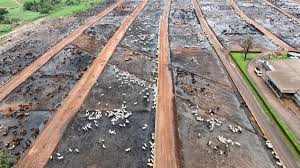
Researchers note that while high-intensity monoculture systems have historically improved productivity and supported global food supply chains, their expansion now poses measurable ecological and economic risks. Heavy reliance on a few uniform crop varieties reduces genetic diversity, limits ecosystem services, and accelerates soil degradation, pest resistance, and nutrient depletion. These factors collectively undermine the adaptive capacity of agricultural landscapes.

The report also underscores that concentrated crop systems heighten exposure to climate-related shocks. Extreme weather events, shifting precipitation patterns, and emerging plant diseases can cause disproportionate impacts when production is centralized around a limited set of crops. Analysts warn that such structural rigidity may restrict the ability of global food systems to recover quickly from disruptions.

Beyond environmental concerns, the study identifies socio-economic consequences. The dominance of a few industrial crops often marginalizes traditional and locally adapted varieties, affecting smallholder farmers and eroding cultural dietary diversity. Overreliance on global commodity chains can also lead to price volatility, supply bottlenecks, and reduced resilience for import-dependent countries.

To address these risks, researchers advocate for policy interventions aimed at diversifying production landscapes. Recommendations include investing in climate-resilient crop breeding, incentivizing mixed-cropping systems, expanding support for underutilized crops, and strengthening regional seed networks. Enhanced monitoring and data-driven land management could also help balance productivity goals with ecological stability.

The analysis concludes that achieving sustainable, resilient food systems will require a strategic shift away from overly concentrated agricultural models. As climate pressures intensify, fostering crop diversity and ecological balance is becoming an essential pathway to safeguarding global food security.


Releated Posts

Report Flags Heavy Agriculture Lobbyist Presence at COP30, Raising Concerns Over Policy Influence

New investigative findings reveal that more than 300 lobbyists representing industrial agriculture interests were present at the COP30…

ByByadmin Mar 25, 2026

U.S. Agriculture Reassesses Trade Strategy as Focus on India and China Intensifies

The United States is placing renewed emphasis on agricultural trade relationships with India and China, a shift that…

ByByadmin Mar 25, 2026

Global Supply Chain Pressures Intensify as Iran War Disrupts Food and Fertilizer Flows

Continuing conflict involving Iran is increasingly straining key agricultural supply chains and raising the risk of higher food…

ByByadmin Mar 25, 2026

China’s Flower Industry Booms Amid Rising Demand and Expanding Agricultural Diversification

China’s flower economy is experiencing a significant surge, according to new reporting from Xinhua, highlighting strong domestic demand…

ByByadmin Mar 25, 2026

Geopolitical Tensions Threaten Global Fertilizer Supply Chain, Raising Risks for Food Production

Escalating geopolitical tensions in the Middle East—particularly disruptions surrounding the strategically vital Strait of Hormuz—are exerting mounting pressure…

ByByadmin Mar 25, 2026

SAP and Syngenta Announce Multiyear Partnership to Scale AI-Driven Agriculture Solutions Worldwide

Technology giant SAP and global agri-innovation leader Syngenta have launched a major multiyear strategic collaboration aimed at accelerating…

ByByadmin Mar 25, 2026

International AI-ENGAGE Awards Launched to Accelerate Next-Generation Farming Innovation

The U.S. National Science Foundation (NSF) has announced the inaugural cohort of AI-ENGAGE Awards, a landmark $2.4 million…

ByByadmin Mar 25, 2026

AI Adoption for Smallholder Farms Accelerates in India and Emerging Markets

Efforts to bring artificial intelligence to smallholder agriculture are gaining momentum as ag-tech firms, research institutions, and digital…

ByByadmin Mar 24, 2026

U.S. National Science Foundation Launches AI-Focused Agriculture Research Funding Initiative

The U.S. National Science Foundation (NSF) has announced $2.4 million in new AI-ENGAGE awards to accelerate artificial intelligence…

ByByadmin Mar 24, 2026

Leave a Reply

Your email address will not be published. Required fields are marked *

error: Content is protected !!
Scroll to Top