

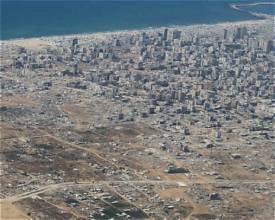
Only a very small portion of agricultural land in Gaza remains both accessible to farmers and free from visible damage, according to a recent geospatial assessment by the Food and Agriculture Organization of the United Nations (FAO). The findings highlight the severe pressure facing agricultural production and food security in the region after prolonged conflict.
The assessment indicates that just around 3% of Gaza’s cropland can currently be classified as both accessible and undamaged. This means that the overwhelming majority of agricultural areas have either suffered damage, become difficult or impossible to access, or face conditions that prevent normal farming activities.
Agriculture has traditionally played an important role in Gaza’s food system, providing crops, employment and income for farming communities. However, damage to agricultural land and infrastructure has significantly disrupted the ability of farmers to cultivate their fields and maintain regular production.
The impact extends beyond cropland itself. Agricultural systems depend on a wide network of supporting infrastructure, including irrigation facilities, roads, storage units, greenhouses, machinery and electricity. Damage or disruption to these services can make even undamaged farmland difficult to use effectively.
The limited availability of productive agricultural land also creates additional concerns for local food supplies. When farmers cannot plant, maintain or harvest crops normally, the availability of locally produced food can decline. This can increase dependence on humanitarian assistance and external supplies, particularly for vulnerable households.
Geospatial assessments are increasingly being used to understand the condition of agricultural resources in conflict-affected areas. Satellite imagery and other remote-sensing technologies allow researchers to identify changes in land use, assess visible damage and monitor agricultural areas where direct field assessments may be difficult.
For Gaza, such information can help humanitarian agencies and agricultural organisations better understand the scale of the disruption and identify areas where recovery efforts may eventually be possible.
Restoring agricultural production, however, will require more than simply returning farmers to their fields. Rehabilitation of damaged land, irrigation systems, agricultural infrastructure and supply chains will be essential. Farmers will also need access to seeds, fertilisers, tools, machinery, water and other critical inputs.
The assessment underscores how conflict can have consequences that extend well beyond immediate physical destruction. Agricultural damage can affect livelihoods, food availability and the long-term resilience of communities for years.
As humanitarian conditions continue to evolve, protecting remaining agricultural resources and supporting the recovery of Gaza’s food production capacity could become an important component of future food-security and reconstruction efforts.


 By
By











