

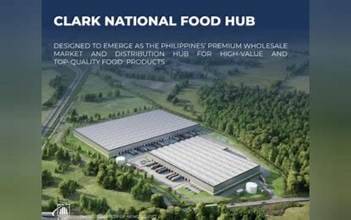
The Philippines is accelerating the development of the Clark National Food Hub, a major infrastructure initiative designed to strengthen the country’s agricultural supply chains, improve food distribution and make the movement of farm products more efficient. The project is expected to play an important role in connecting farmers and agricultural producers with markets, distributors and consumers.
The development of a modern food hub comes as the Philippines seeks to improve the efficiency and resilience of its food system. Agricultural products often pass through several stages between farms and consumers, including collection, storage, transportation, processing and distribution. Weaknesses at any stage can increase costs, create delays and contribute to food losses.
The Clark National Food Hub is intended to address some of these challenges by creating a more organized center for the handling and distribution of agricultural commodities. Its strategic location in the Clark area could provide important connectivity to major markets and transportation networks, helping agricultural products move more quickly from production areas to consumers.
Improved logistics are particularly important for perishable commodities such as fruits, vegetables, meat, fish and other fresh food products. Efficient storage and transportation can help maintain product quality while reducing spoilage and post-harvest losses. A well-developed food hub can also provide better facilities for sorting, packaging, cold storage and distribution.
For farmers, stronger agricultural logistics could create better access to markets and potentially reduce dependence on multiple intermediaries. More efficient supply chains may allow producers to respond more effectively to market demand and improve the value they receive from their products.
The project also has broader implications for food security. The Philippines is regularly exposed to typhoons, floods, droughts and other weather-related disruptions that can affect agricultural production and transportation. Strengthening food distribution infrastructure can help the country respond more effectively when local supply chains are disrupted.
A centralized food hub could also support more efficient inventory management. Adequate storage facilities allow food products to be managed according to market requirements, reducing pressure to sell agricultural commodities immediately after harvest. This can help stabilize supplies and potentially reduce sudden price fluctuations.
The initiative is also expected to support the wider agricultural economy by creating opportunities for logistics providers, processors, wholesalers and other businesses involved in the food supply chain. Better infrastructure can encourage private-sector investment and promote the development of value-added agricultural activities.
Another important aspect is connectivity. The Clark area has developed into a major economic and transportation center, providing access to road networks and other infrastructure. This connectivity could make the food hub an important distribution point for agricultural products moving between production areas and major population centers.
However, the success of the project will depend not only on construction but also on effective management and integration with farmers, cooperatives, traders, processors and retailers. Reliable cold-chain facilities, digital logistics systems, transparent pricing mechanisms and efficient transport services will be important for maximizing its benefits.
The Philippines is increasingly focusing on modernizing its agricultural supply chains to improve food security and reduce inefficiencies. Investments in storage, transportation, processing and distribution can help create a more resilient food system capable of responding to changing consumer demand and unexpected disruptions.
The Clark National Food Hub could therefore become an important component of this broader transformation. By improving the movement of agricultural commodities and strengthening connections between producers and markets, the project has the potential to reduce post-harvest losses, improve distribution efficiency and support farmers.
As construction progresses, attention will remain focused on how quickly the facility can become operational and how effectively it can be integrated into the country’s existing food distribution network. If successfully implemented, the Clark National Food Hub could provide a stronger foundation for a more efficient, resilient and market-oriented Philippine agricultural sector.


 By
By











