

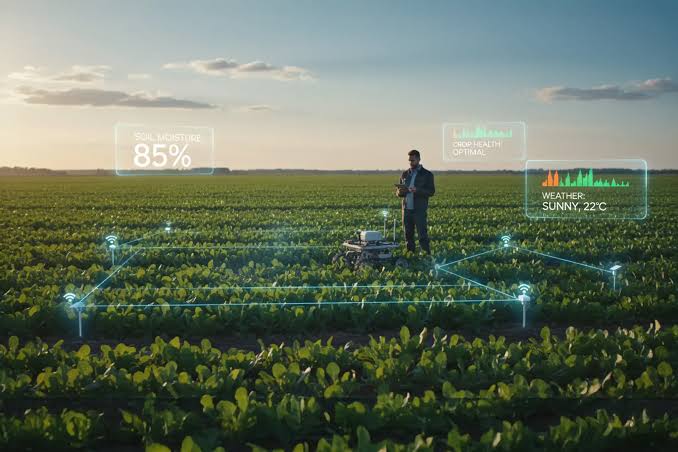
A breakthrough in precision agriculture research is set to transform greenhouse farming as researchers have developed an advanced multimodal artificial intelligence (AI) system capable of forecasting sweet pepper harvests with significantly greater accuracy. The innovative technology combines image analysis with time-series data, enabling growers to make better production decisions, improve resource management, and enhance overall greenhouse efficiency.
Accurate yield forecasting has become increasingly important for modern agriculture, particularly in controlled-environment farming, where growers need reliable estimates to optimize harvesting schedules, labor management, storage, and market planning. Traditional forecasting methods often rely on manual observations and historical data, which can be time-consuming and less precise. The new AI-powered approach offers a smarter and more data-driven alternative.
The multimodal system integrates high-resolution images of crop growth with continuously collected environmental and production data, including temperature, humidity, light intensity, irrigation schedules, and plant development over time. By analyzing these multiple sources of information simultaneously, the AI model can predict harvest volumes more accurately than conventional forecasting techniques.
Researchers say the technology enables greenhouse operators to monitor crop development in real time while identifying growth patterns that may not be visible through manual inspections alone. Advanced computer vision algorithms assess fruit size, color, maturity, and plant health from images, while time-series analysis tracks changes in environmental conditions that influence crop performance.
The improved forecasting capability allows growers to plan harvesting activities more efficiently, reducing labor shortages and minimizing post-harvest losses. Better production estimates also help farmers coordinate transportation, storage, packaging, and marketing, ensuring that produce reaches consumers at the right time and with minimal waste.
Sweet pepper production, widely practiced in high-tech greenhouses around the world, requires careful management to maintain quality and maximize yields. Even small improvements in forecasting accuracy can lead to significant economic benefits by reducing operational costs and improving supply chain efficiency.
Experts believe the new AI system represents a major advancement in precision agriculture, where digital technologies are increasingly being used to optimize farming practices. Artificial intelligence, machine learning, remote sensing, and Internet of Things (IoT) devices are rapidly transforming agriculture by providing farmers with real-time insights and data-driven recommendations.
Beyond sweet peppers, researchers expect the multimodal forecasting technology to be adapted for other greenhouse crops such as tomatoes, cucumbers, strawberries, and leafy vegetables. The same approach could also support open-field agriculture by integrating satellite imagery, drone data, weather information, and soil monitoring systems to improve yield predictions across a wide range of crops.
As climate change and unpredictable weather continue to challenge food production, accurate forecasting tools are becoming increasingly valuable. AI-driven prediction systems can help farmers respond more effectively to changing growing conditions, improve resource efficiency, and enhance the resilience of agricultural production systems.
The latest research also highlights the growing role of digital agriculture in addressing global food security challenges. By enabling more precise production planning, reducing waste, and improving crop management, AI technologies are helping farmers produce more food while using fewer resources.
Agricultural scientists believe innovations like multimodal AI forecasting will play a key role in the future of sustainable farming. As greenhouse production expands worldwide to meet rising demand for fresh vegetables, advanced decision-support technologies are expected to become an essential component of modern agricultural systems, delivering higher productivity, greater efficiency, and improved profitability for growers.


 By
By











