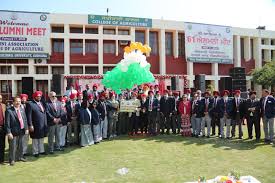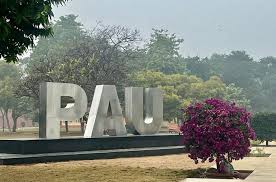
Punjab Agricultural University (PAU), Ludhiana, has achieved a significant international milestone by being selected as the only agricultural institute from India to join the BRICS Network University (BNU) in the field of sustainable agriculture and food security. The inclusion places PAU among a select group of leading institutions from BRICS nations—Brazil, Russia, India, China, and South Africa—working collaboratively to address global agricultural and food system challenges.
The BRICS Network University is an intergovernmental initiative designed to promote academic cooperation, joint research, faculty exchange, and student mobility among member countries. Within this framework, the sustainable agriculture and food security track focuses on developing science-based solutions to improve productivity, resilience, and sustainability in agriculture, while ensuring access to safe and nutritious food for growing populations.
PAU’s selection reflects its long-standing contribution to agricultural research, education, and extension, particularly in areas such as crop improvement, resource-efficient farming, climate-resilient agriculture, and food system sustainability. The university has played a pivotal role in India’s agricultural transformation and continues to generate innovations relevant not only at the national level but also for other developing and emerging economies.
As part of the BRICS Network University, PAU will collaborate with partner institutions on joint research projects, curriculum development, and capacity-building initiatives. The partnership is expected to facilitate knowledge exchange on sustainable farming practices, soil and water management, agri-biotechnology, climate adaptation strategies, and digital agriculture. It will also open opportunities for postgraduate students and researchers to participate in international academic programs and collaborative studies.
The initiative aligns closely with India’s broader goals of promoting sustainable agriculture, enhancing food security, and strengthening international cooperation in agricultural science. Through this platform, PAU will contribute Indian experiences and innovations while also gaining exposure to best practices and technological advances from other BRICS countries.
University officials have described the development as a recognition of PAU’s scientific credibility and global relevance. They noted that participation in the BRICS Network University will further strengthen PAU’s role as a hub for advanced agricultural research and policy-oriented studies, while reinforcing India’s voice in shaping the global sustainable agriculture agenda.
The inclusion of PAU in this prestigious international network is expected to enhance collaborative research outcomes, support human resource development, and contribute meaningfully to addressing shared challenges of sustainability, climate change, and food security across BRICS nations and beyond.

 By
By