

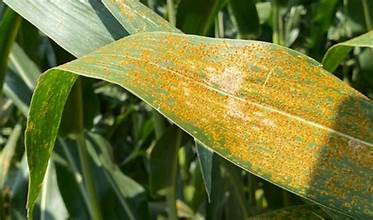
Southern rust, a destructive fungal disease that affects corn, has spread across multiple counties in the U.S. state of Missouri, prompting agricultural experts to urge growers to intensify field scouting and implement timely disease management practices. The rapid spread of the disease has raised concerns about potential yield losses if infections are not detected and controlled during the crop’s critical growth stages.
Plant pathologists and extension specialists have confirmed the presence of southern rust in several corn-producing areas, advising farmers to closely monitor their fields for early symptoms. The disease, caused by the fungus Puccinia polysora, thrives under warm temperatures and humid conditions, making mid-to-late summer an ideal period for its development and spread.
Southern rust typically appears as small, circular to oval, orange-colored pustules on the upper surface of corn leaves. As the infection progresses, the disease can spread rapidly throughout the crop canopy, reducing the plant’s ability to carry out photosynthesis. Severe infections may lead to premature leaf death, poor grain filling, and significant yield reductions, particularly if the disease develops before the crop reaches maturity.
Agricultural experts emphasize that early detection is essential for minimizing crop damage. Farmers are encouraged to conduct regular field inspections, especially in areas where weather conditions favor disease development. Corn planted later in the season or fields that are still in the grain-filling stage are considered particularly vulnerable to southern rust infections.
Extension specialists recommend that growers evaluate disease severity and crop growth stage before deciding on fungicide applications. Timely use of effective fungicides, when economically justified, can help protect green leaf area and preserve grain yield. However, experts stress that fungicides provide the best results when applied early in the disease cycle rather than after severe infections have become established.
Weather conditions continue to play a crucial role in the spread of southern rust. Warm temperatures, high humidity, and frequent rainfall create ideal conditions for fungal spores to multiply and move between fields through wind currents. Farmers are therefore advised to remain alert as changing weather patterns could accelerate disease development across additional corn-growing regions.
Missouri is one of the important corn-producing states in the United States, and maintaining healthy crops is essential for both domestic grain supplies and export markets. Corn is widely used for food products, livestock feed, ethanol production, and industrial processing, making disease management a key priority for producers.
Agricultural researchers are also encouraging growers to adopt integrated disease management strategies. These include selecting tolerant hybrids where available, maintaining regular crop monitoring, following local extension advisories, and using fungicides based on economic thresholds and disease forecasts. Such integrated approaches help reduce unnecessary chemical applications while improving long-term crop protection.
Despite the emergence of southern rust, experts remain optimistic that timely intervention can significantly limit its impact. With regular scouting, accurate disease identification, and prompt management decisions, many growers can protect crop yields and minimize economic losses during the current growing season.
As southern rust continues to spread across Missouri, agricultural authorities are closely monitoring the situation and providing updated guidance to farmers. Continued vigilance, effective disease surveillance, and science-based management practices will be critical to safeguarding the U.S. corn crop and ensuring stable production throughout the remainder of the season.


 By
By











